Discover the Beginnings of the Iconic Cook Terrace in Milton

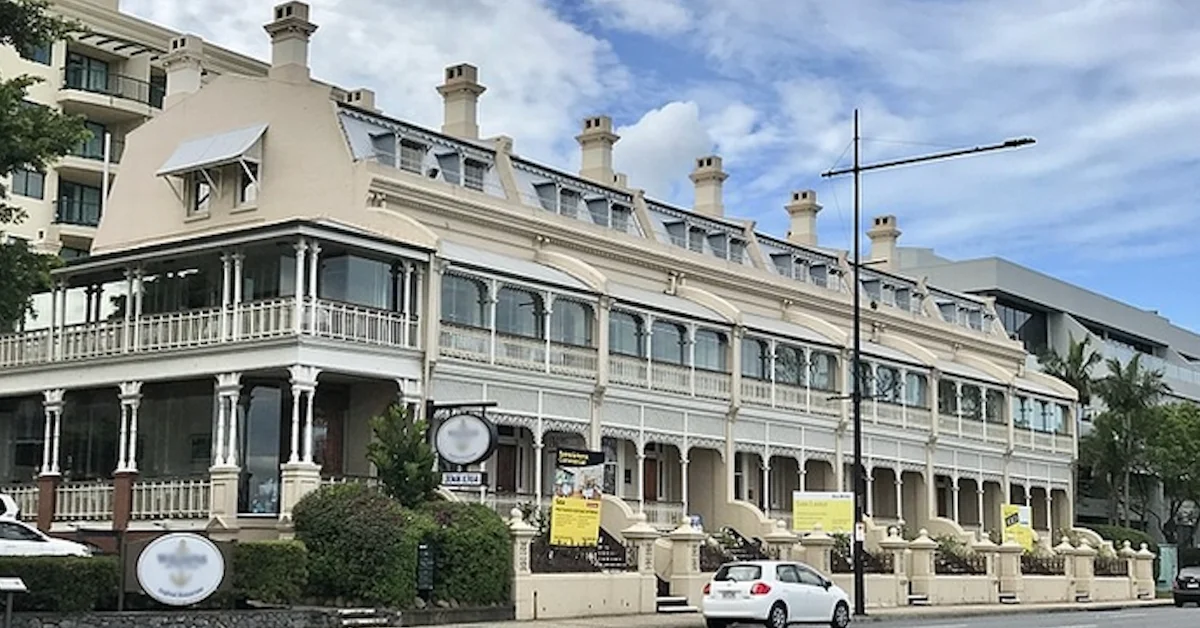
Cook Terrace in Milton is considered an iconic landmark in the suburb. The building’s elegant and well-preserved features significantly contribute to the Coronation Drive riverscape and streetscape.


Currently, Cook Terrace is one of the few intact and surviving nineteenth-century terraces in Brisbane. Along with the changing times, the heritage-listed structure has been an important part of many people’s lives, especially when it was converted to flats, catering to many students as well as families in the 1960s and 1970s.

History of Cook Terrace

Photo credit: www.brisbane.qld.gov.au

In September 1888, Brisbane builder Joseph Blain Cook acquired the title to subdivisions 1 to 6 of the Milton House estate, a section of the prime real estate along the Brisbane River, from John Frederick McDougall.

After his acquisition, he raised a mortgage of £6,000 on the property to finance construction of the terrace.

Cook initially constructed the building as a  two-storeyed brick row of six houses in 1888-1889. He built the first house in late 1888 whilst the remainder of the row was completed in 1889. The architect of the terrace is unknown.

The terrace was built as a rental property since the Queensland Undue Subdivision of Land Prevention Act of 1885 prohibits the granting of titles to individual terrace houses.

The enterprise might have been promising at the time, however, within two years of construction, Cook was declared insolvent. As a result, the terrace was passed to his mortgagees.

Milton Terrace

Cook Terrace, Coronation Drive, Milton, Brisbane, 1945. Photo credit: Queensland State Archives, Digital Image ID 536

The property was known as Milton Terrace in 1895. With its river views and breezes as well as its proximity to the centre of town, the terrace remained as one of Brisbane’s more prestigious rental addresses. This went on until the twentieth century.  The property was attracting mainly professional and white-collar tenants at the time.

The Rourke family owned the terrace from 1895. It is likely that they were responsible for adding a southwestern verandah and dome room.

Cook Terrace (2009). Photo credit: Heritage Branch staff

Each house had been subdivided into at least two flats by 1920. Builder Simon Smith acquired the property in 1923. He may have been responsible for removing the front parapet and installing dormer windows.

In the 1930s, the name Milton Terrace was lost. Consequently, the houses were known collectively as Gloralgar Flats by the end of the decade.

During the Second World War, it was believed that army authorities rented the flats for officer accommodation.

After the war, the verandahs were enclosed and the six houses were further converted into twenty-seven flats which were considered something of a bohemian retreat.

The building remained as a visual landmark along Coronation Drive despite its decline. The terrace was then refurbished and recycled as offices and a restaurant in 1984.

Cook Terrace Now

Cook Terrace in 1980 and 2018. Photo credit: Passing Time/Facebook

Cook Terrace continues to marvel passersby with its exquisite architecture. The restaurant side of the property has seen a few restaurants come and go. This includes the famous Joseph Alexanders and Wilsons on the River.

The historic building has been added to the  Queensland Heritage Register on 21 October 1992.


Today, Cook Terrace is home to several corporate offices. It was also the site of a Mediterranean restaurant, at one point.

Updated 16-April-2026

Historic Homes in Brisbane: Milton House

One of the oldest surviving houses in Brisbane, Milton House is arguably the most significant landmark in the suburb.


The heritage-listed residence has been home to prominent personalities in Milton over the years. The house is also particularly special since this is where the suburb got its name.

Milton House helps in telling the story of Queensland’s history because of its association with important early agricultural experimentation and the pastoral development of the western suburbs. In fact, Milton house is the first substantial house in the western suburbs.

Get to know the history of Milton House and the important personalities that helped shape the suburb.

History of Milton House

BRISBANE’S HISTORIC HOMES, XLV.—MILTON HOUSE, MILTON. (1931, January 8). The Queenslander (Brisbane, Qld. : 1866 – 1939), p. 37. Photo credit: National Library of Australia

Built around 1852 or 1853 for retired Queen Street chemist Ambrose Eldridge, Milton House was the first substantial house in the area. The remarkable residence instantly became a local landmark.

Milton House was the base for Eldridge’s experimental farming. At the time, Moreton Bay region was still struggling to establish itself. Later, the home became the centre for JF McDougall’s considerable pastoral holdings in the area.

Ambrose Eldridge

Panoramic view of Milton, showing Milton House in the middle distance, ca. 1874. Photo credit: John Oxley Library, State Library of Queensland. Image number: 66141.

Despite having little knowledge of farming, Eldridge bought over 30 acres of land along the northern bank of the Brisbane River in 1851. He then named it Milton Farm after his birthplace which was Greater Milton, near Oxford, England.

Eldridge experimented with cotton growing to prove that agriculture at Moreton Bay is both sustainable and profitable. He was initially one of the most successful cotton growers in the area.

In 1853, his cotton experiment was successful that his samples of cotton sent to Sydney in a government-sponsored competition won first prize. He also sent samples of the Milton cotton to the Paris Exhibition of 1855, where it was highly acclaimed.

With the hopes of expanding his efforts to promoting sustainable local farming in Brisbane, Eldridge took a lease of approximately 400 acres of land at Eagle Farm. He later sold the Milton Estate to pastoralist John Frederick McDougall in January 1856.

Unfortunately, Eldridge’s Eagle Farm experiment seems to have failed which forced him to go back to the chemist business in 1859. He sadly died a year after, leaving his family penniless.

Notable Residents of Milton House

Milton House, Milton, ca. 1870. Photo credit: John Oxley Library, State Library of Queensland.

After acquiring the land, JF McDougall, a member of the first Queensland Legislative Council, farmed the Milton Estate and enlarged the house considerably.

The McDougalls then lived at Rosalie Station and let Milton from 1864.

Well-known personalities that have lived in the house included Arthur Manning, the Colonial Under-Secretary; Henry Walsh, MLC and speaker of the Legislative Assembly; and James Crombie.

Milton house later gave its name to the local suburb, whilst neighbouring Rosalie took its name from McDougall’s Darling Downs property.

After a few years of tenancy, Milton Farm was sold to the Queensland Investment and Land Mortgage Co. Ltd in 1885. The estate was then subdivided for residential development at a time when the newly created streets of McDougall, Manning, Walsh, and Crombie were named after previous owners or occupiers of Milton House.

Side view of Milton House with the Manning family on the verandah, 1868. Photo credit: John Oxley Library, State Library of Queensland. Image Number: 63477

Other owners and occupiers of the historic home include:

  • The Commissioner of Police, David Thompson Seymour (1887).
  • Dr Hugh Bell, a noted physician and consultant at the Brisbane General Hospital for forty years (1888).
  • Grain merchant William Siemon and his family, who bought the estate in 1904 and renovated the premises in 1922.

The Siemon family then gave the property to the Presbyterian Church in 1955. The church used the Milton House as a hostel for women college students until 1983.

The building subsequently became part of the Kings Row Corporate Park development, at which time it was refurbished to resemble its outward appearance of the 1860s.

Milton House Now

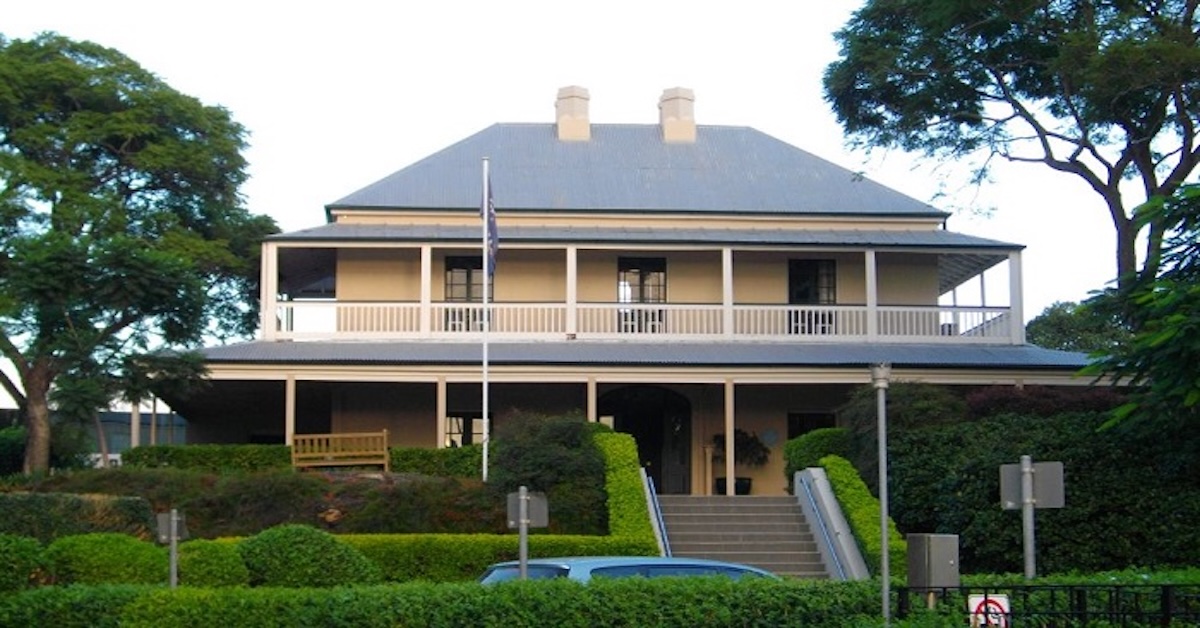
The Milton House in 2018. Photo credit: kgbo/Wikimedia Commons

Today, Milton House remains to be a significant landmark in the suburb. It is currently one of the sites of Brisbane City Council’s Milton Heritage Trail.


The home still stands out with its striking features of Colonial Georgian architecture. Despite the developments that currently surrounds the heritage-listed home, a glimpse at the historic home reminds locals of its rich and valuable history.

Updated 18-April-2026


Foo Fighters Bring the Take Cover Tour to Suncorp Stadium in November

The Foo Fighters are returning to Brisbane for the first time since 2023, with Suncorp Stadium in Milton set to host the band on Thursday, November 5 as the opening night of their Take Cover Australian and New Zealand stadium tour.


The announcement has been building for weeks, following the band’s history-making one-off concert in Launceston in January 2026, where Dave Grohl promised the crowd the Foos would be back sooner than expected. The band has now locked in nine stadium dates, kicking off in Brisbane in November 2026 before heading across the country and wrapping up in Perth in January 2027. The Brisbane show will open the tour.

For Milton locals and the broader inner-Brisbane community, Suncorp Stadium is a well-worn venue for big rock nights. The Foos have played the ground before on their 2023 run, and the familiarity of the setting is part of the appeal: a stadium that functions as a genuine community gathering point, not just a concert shed.

A New Album and a New Era

The timing of the tour could not be better for fans hungry for fresh material. The band’s 12th studio album, Your Favorite Toy, is due for release on April 24, ahead of the Take Cover tour dates. The band recorded the album at home and co-produced it with Oliver Roman. It marks their first studio release with new drummer Ilan Rubin, who joined after Josh Freese left the band in 2025.

Supporting Acts and a Regional Flavour

Dave Grohl has described the new record as featuring noisy, loud bangers that are uptempo and reminiscent of the band’s earlier work. The title track, already streaming now, pairs crunchy guitars with a propulsive rhythm and an infectious chorus. By November, Brisbane audiences will have had seven months to get to know the new material, and the setlist is set to mix it with three decades of favourites — from Everlong and The Pretender to whatever the Foos choose to unleash from the new record.

The Brisbane show features local and national supports in Full Flower Moon Band, a Brisbane act, alongside Byron Bay’s Mini Skirt. The Foos have handpicked 16 different Australian and New Zealand acts across the full tour, reflecting the band’s long-standing commitment to giving emerging local artists a platform on the biggest possible stages.

The tour is notable for including concerts in Townsville and Newcastle alongside the major capitals, giving regional audiences a rare chance to see one of rock’s biggest drawcards without travelling to Sydney or Melbourne. The Foo Fighters have made 15 visits to Australia to date, and have shifted over 1.8 million records in the country, with nine number one albums.

How to Get Tickets

A Frontier Members presale opens on Monday, February 23 at noon Queensland time. General public tickets go on sale Wednesday, February 25 at noon. The Brisbane show is a licensed all-ages event. Full ticket and tour information is available here.


Published 23-February-2026. Updated 15-March-2026

Queensland Reds Face Crucial Early Test Against the Highlanders in Milton

This isn’t just Round 2. This is where seasons either steady, or start to slip.

After a 36–12 season-opening loss to the Waratahs, a game that remained within reach past the hour mark, the Queensland Reds return for a Friday night match to their spiritual and competitive centre, the Suncorp Stadium in Milton.

With key Wallabies returning, combinations re-forming and a home crowd behind them, this is Queensland’s first real chance to define 2026 on their terms.

Match details
Friday, 27 February 2026
6:35pm AEST (Brisbane time)
Suncorp Stadium, Milton
Watch live on Stan Sport

The Caxton Street walk will feel different this week. Sharper. More urgent. The noise won’t be hopeful. It will be expectant.

The Context: Lessons From Sydney

The scoreline in Sydney flattered the Waratahs late. For over an hour, the Reds were in the contest. But at this level, margins harden quickly.

Captain Fraser McReight has spoken about two priorities since that night:

  • managing referee dialogue in high-pressure moments
  • tightening the “little moments” that accumulate over 80 minutes

There has been no talk of overhaul at Ballymore — only improvement.

Across the competition, the benchmark has already been set. The Brumbies’ 50–24 dismantling of the Crusaders in Christchurch signalled that Australian sides can dictate terms. McReight has acknowledged it as a standard to chase, but without emotional overreach.

The Reds’ focus remains internal.

Reinforcements: Experience Returns

In Round 1, Queensland carried an injury list of 11 players, including influential Wallabies skipper Harry Wilson and both frontline flyhalves, Tom Lynagh and Carter Gordon.

This week looks different.

Wilson returns at No.8 in his seventh Super Rugby season, fresh from inclusion in World Rugby’s 2025 Dream Team of the Year. His presence restores balance to the back row.

Gordon starts at flyhalf for his Reds Super Rugby debut, as a player who first signed with the club at 17 and now gets his moment under lights at Suncorp. He partners Sunshine Coast product Louis Werchon in the halves.

Lynagh remains sidelined as coach Les Kiss maintains a measured approach following a disrupted 2025 season that included concussions and hamstring issues. The club is prioritising longevity over urgency.

Four additional Wallabies strengthen the 23-man squad, including Filipo Daugunu, Josh Nasser and Kalani Thomas off the bench.

Team List Breakdown

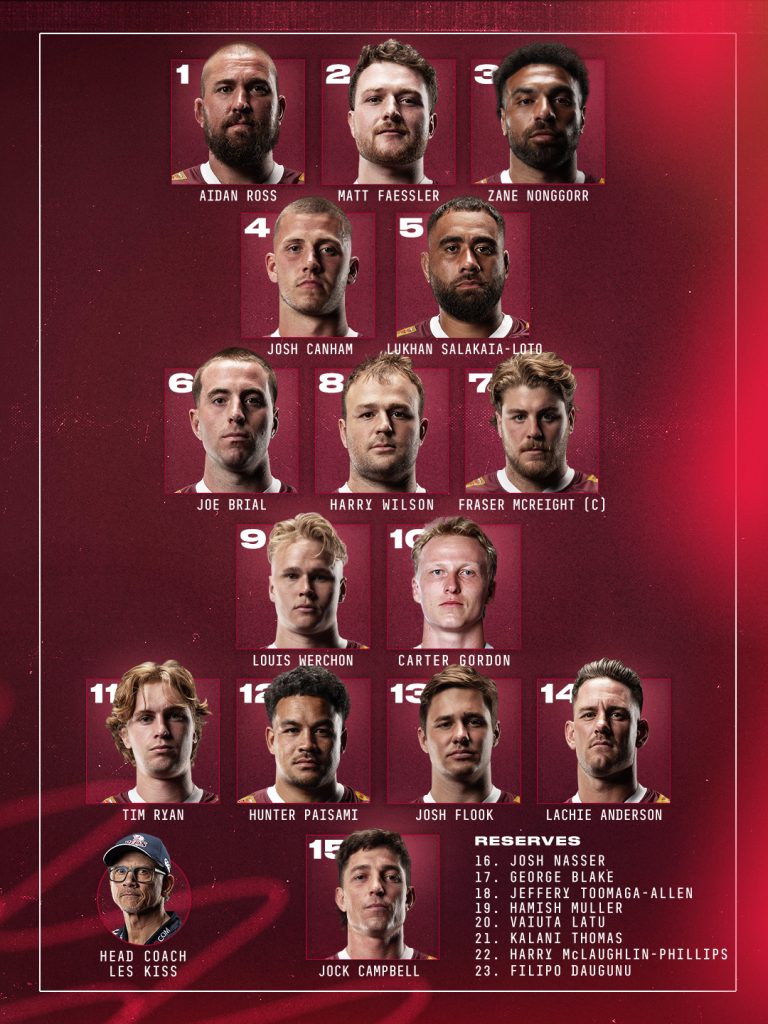
Queensland Reds Feb 27 lineup at Suncorp Stadium
As of Feb 25. Photo Credit: Facebook/Queensland Reds

This is a side selected for control and physical authority.

Front Row:
Aidan Ross, Matt Faessler and Zane Nonggorr form an all-Wallabies trio capable of setting scrum tone early. Jeffery Toomaga-Allen reinforces the platform late.

Second Row:
Josh Canham and Lukhan Salakaia-Loto provide height and edge at lineout and in contact.

Back Row:
Joe Brial, Fraser McReight (c) and Harry Wilson — breakdown pressure, defensive volume and carry power in balance.

Halves:
Werchon’s tempo and Gordon’s tactical kicking will dictate field position.

Midfield and Backfield:
Hunter Paisami and Josh Flook provide directness through the middle, while Jock Campbell’s composure at fullback remains essential against a Highlanders side known for variation.

Impact Bench:
Daugunu offers finishing strike. Harry McLaughlin-Phillips provides flexibility at No.10. Kalani Thomas is capable of shifting momentum late.

This is not experimentation. It is reinforcement.

Highlanders Bring Continuity and Experience Off the Bench

The Highlanders arrive in Brisbane backing continuity for their first away game of the 2026 Super Rugby Pacific season.

Head coach Jamie Joseph has made just two changes to the starting XV that fell four points short in a narrow loss to the Chiefs in Round Two.

Will Stodart has been promoted to the starting side with Oliver Haig shifting to the bench, while Adam Lennox comes into the No.9 jersey and Folau Fakatava moves to the reserves.

The bigger story may be on the bench.

After Henry Bell and Josh Bartlett filled reserve front-row roles last week, Soane Vikena and Daniel Lienert-Brown are set to provide impact against Queensland. This is a clear injection of experience as Joseph looks to ensure his side finishes stronger than it started.

The Highlanders coach acknowledged the challenge awaiting in Milton.

“The Reds are coming off a bye and they’ve got a proud record at home,” Joseph said.

“Our game is growing, and we’re working hard on the small details that will help us deliver a more complete 80-minute performance. We’ll need that level of accuracy and intensity if we’re going to get the job done on Friday,” he added.

For a side that pushed the Chiefs deep into the contest, the message is clear: Brisbane is about precision across the full 80.

Why Suncorp Matters

The Reds have won 10 of their 14 matches at Suncorp Stadium across the 2024 and 2025 seasons in Super Rugby Pacific.

The venue compresses noise. Momentum builds quickly. Visiting teams feel pressure compound.

Hooker Matt Faessler described it this week as a “unique ecosystem” — the Caxton Street run-in, the proximity of the crowd, the surge once Queensland gain ascendancy.

For both sides seeking early-season traction, there is no better stage.

The Run Ahead

Friday is the immediate focus, but the schedule sharpens quickly: (All schedules as of press time)

  • ACT Brumbies (away) – Saturday, 7 March, 6:35pm
  • Waratahs (home) – Friday, 14 March, 6:35pm
  • Fijian Drua (away) – 21 March, 1:35pm

That stretch will shape the narrative of the opening month.

A win over the Highlanders does more than level the ledger. It builds authority before facing Australian heavyweights again.

The Stakes

The Reds have reached the semi-finals in each of the past two seasons. The ambition in 2026 is to go further.

The Waratahs sit unbeaten. The Brumbies have fired an early statement.

Queensland’s response begins in Milton.

Kick-off is 6:35pm AEST at Suncorp Stadium, streaming live on Stan Sport.

By full-time on Friday night, we’ll know whether this was simply a home fixture, or the moment the Reds re-established their edge.

Under lights. At Suncorp. With the season waiting.

Published 26-February-2026

Royal Edinburgh Military Tattoo Marks 75th Anniversary With Historic Four-Night Run at Milton’s Suncorp Stadium

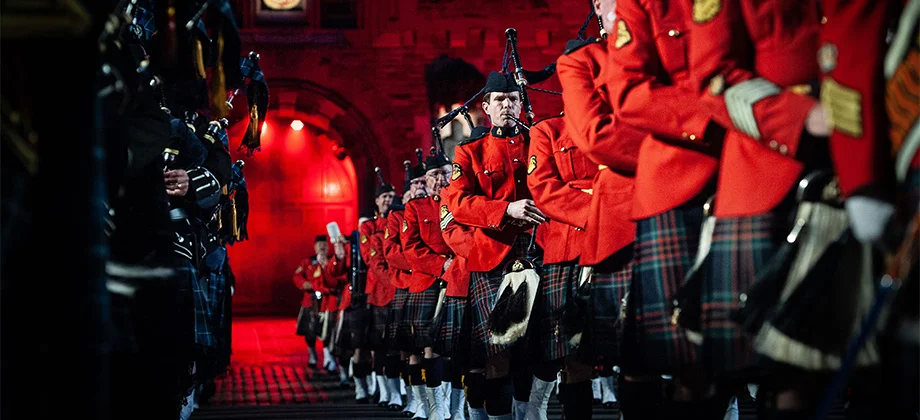
More than 1,000 performers from 13 countries have descended on Milton this week as the Royal Edinburgh Military Tattoo brings its 75th anniversary milestone show exclusively to Suncorp Stadium from February 12 to 15, marking the first time any act has delivered four consecutive nights at the iconic venue.


Over 800 musicians flew into Brisbane over the weekend to join the globally diverse cast for “The Heroes Who Made Us,” the Tattoo’s 75th anniversary production celebrating the heroes who have shaped and supported the iconic performance over 75 years. The four-night exclusive Brisbane season represents the Tattoo’s first visit to Queensland and one of its most ambitious international stadium productions to date.

Creative Director Alan Lane said transforming over 1,000 cast members into one seamless production in just a few days is the unique challenge that defines the Tattoo. The cast has been undertaking intensive full-scale rehearsals at Suncorp Stadium this week, bringing together military bands, cultural groups, dancers, drummers and pipers, many performing together for the very first time.

Record-Breaking Economic Impact for Milton and Brisbane

The 75th anniversary event is expected to deliver an estimated $39 million economic impact to Queensland, with over 38,000 Tattoo fans traveling from interstate and overseas to attend the Milton performances. Demand has remained exceptionally high, with new ticket releases made available as the show dates approach.

Royal Edinburgh Military Tattoo to Perform in Milton for 75th Anniversary
Photo Credit: RACQ

Brisbane Airport CEO Gert-Jan de Graaff said the airport has never seen this much tartan on its tarmac, with the gateway playing a vital role in welcoming performers and supporting the logistics that make world-class cultural events possible.

Caxton Street Transforms Into Royal Mile

On Friday, February 13 at 5pm, Brisbane’s Caxton Street will transform into the Royal Mile as marchers from across Brisbane join pipers and drummers from the Tattoo in a ceremonial march down to Suncorp Stadium. The event kicks off at the top of Caxton Street with a big blow by the bagpipers at 6pm, creating a proper welcome for the 75th anniversary performances.

The march celebrates Brisbane hosting a world-record four shows of the Tattoo at Suncorp Stadium, an achievement that organisers say deserves proper fanfare. Residents and visitors are invited to bring energy and noise to make history alongside the international performers.

Globally Diverse Cast Brings 75th Anniversary Show to Life

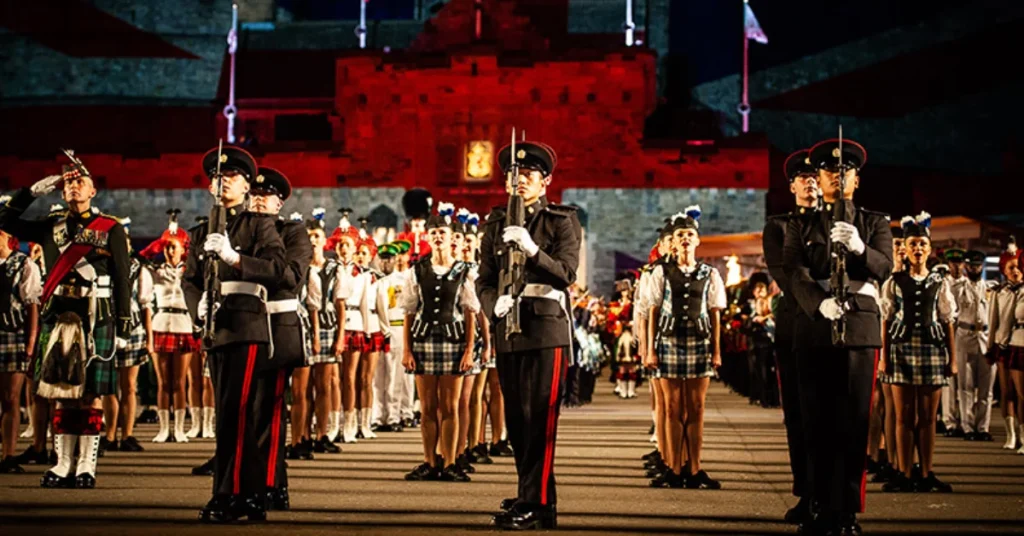
More than 30 bands and cultural groups will perform in “The Heroes Who Made Us,” including UK Military Bands from the Royal Navy, British Army and Royal Air Force, the Combined Military Bands of the Australian Defence Force, Queensland Police Pipe Band, Western Australia Police Pipe Band, Australia’s Federation Guard, His Majesty the King of Norway’s Guard Band and Drill Team, Japan Air Self-Defense Force Central Band, His Majesty’s Armed Forces The Royal Corps of Musicians Tonga, Top Secret Drum Corps, United States Marine Drum and Bugle Corps, and Brisbane Boys’ College Pipe Band.

Royal Edinburgh Military Tattoo to Perform in Milton for 75th Anniversary
Photo Credit: RACQ

Representing Australia, New Zealand, Canada, Japan, Norway, Switzerland, Tonga, the United Kingdom, the United States and more, the cast creates one of the most globally diverse lineups ever assembled for an international Tattoo production.

Brisbane’s First Hosting of Iconic Scottish Tradition

Renowned for stirring music, military precision, cultural displays and dramatic performances set against the backdrop of Edinburgh Castle, the Royal Edinburgh Military Tattoo draws over 230,000 spectators annually in Scotland and over 100 million more worldwide through international broadcasts. Hundreds of thousands attended previous Australian editions in Sydney (2005, 2010, 2019) and Melbourne (2016).

The 75th anniversary performances will draw visitors from across the country, deliver a boost for Milton businesses, and shine a global spotlight on Brisbane as Australia’s lifestyle capital.

The Brisbane season represents the Tattoo’s return to Australia for the first time since 2019. Cutting-edge lighting, immersive sound design and large-scale visual effects will elevate the performance, blending the timeless traditions of the British Armed Forces with modern storytelling and world-class production innovation.

Final tickets for the 75th anniversary performances on 12 February (Thursday), 13 February (Friday), 14 February (Saturday) and 15 February (Sunday) are available through Ticketek.


Published 11-February-2026.

Brisbane Roar Books Three-Year Kit Deal With Spanish Brand Kelme

Brisbane Roar has locked in a three-year partnership with Spanish sportswear manufacturer Kelme, guaranteeing a fresh look for the club’s gear starting with the 2026-27 season.


The move sees the Milton-based outfit ditch its previous supplier for Kelme-designed jerseys and training equipment. The rollout will cover the entire club, kitting out the A-League Men’s, Women’s, and NPL Queensland ‘B’ squads in the Spanish brand’s signature style. By partnering with Kelme, the Roar aligns itself with a maker that boasts deep European pedigree, including a history of supplying kits to some of the biggest names in Spain’s La Liga.

What the Partnership Means for Supporters

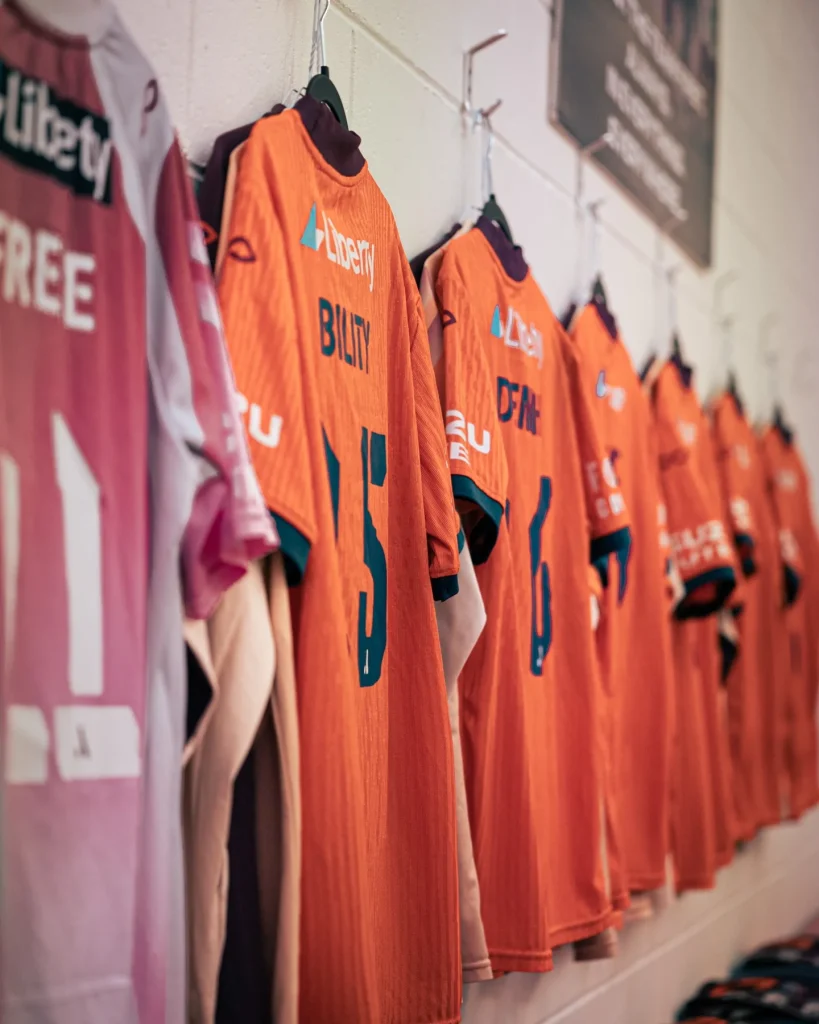
Fans heading to Suncorp Stadium for the men’s fixtures or Spencer Park for the A-League Women’s games will see the Kelme “paw print” logo front and centre from next season. The deal covers everything from the match-day playing strips to training gear and supporter merchandise. While the club is keeping the specific designs under wraps for now, the partnership marks a significant commercial win for the Roar.

The Roar deal bolsters Kelme’s presence in the Australian top flight, joining Macarthur FC in the Spanish brand’s growing A-Leagues stable. Having manufactured football gear since 1977, Kelme currently supplies professional clubs across Europe, Asia, and South America, and is clearly looking to cement its footprint in the local market.

Brisbane Roar jerseys
Photo Credit: Brisbane Roar FC / Facebook

Building Brand Recognition in Brisbane

For Brisbane Roar, the three-year commitment provides much-needed stability in their retail and kit supply. The long-term nature of the deal allows the club to build a consistent brand identity and offer a more reliable range of merchandise for the fans.

The partnership comes as A-League clubs look to international brands to help them stand out on the pitch and create unique identities that resonate with the “Orange Army.” Kit sales remain a vital revenue stream for the club, and this partnership secures their commercial backing for the foreseeable future.

Expect the Roar to officially unveil the 2026-27 designs, release dates, and merchandise pricing in the lead-up to the season kick-off later this year.


Published 9-February-2026.

Suncorp Stadium to Host 10 Rugby World Cup Matches in 2027

Milton’s Suncorp Stadium will host 10 matches during the Rugby World Cup 2027, including two quarter-finals, as Brisbane prepares to welcome international rugby fans between October and November 2027.


The match schedule released this week confirms the 52,500-capacity venue will stage six pool matches, two round-of-16 fixtures, and two quarter-finals as part of the expanded 24-team tournament running from 1 October to 13 November 2027.

Brisbane’s fixtures include England versus Tonga on Saturday 2 October, followed by pool matches featuring Argentina, Canada, France, Japan, South Africa, Georgia, Scotland, and Portugal. Australia’s Wallabies will face Chile on Saturday 16 October in a highly-anticipated home fixture.

The tournament represents Queensland’s largest rugby event before the Brisbane 2032 Olympic and Paralympic Games, with projected economic impact of $212 million across accommodation, hospitality, and tourism sectors.

Tournament Schedule and Matchups

Brisbane’s Rugby World Cup programme opens with England facing Tonga on Saturday 2 October, launching Queensland’s tournament involvement. Pool stage matches continue throughout October, featuring established rugby powers and developing nations.

Argentina meets Canada on Monday 4 October, followed by France versus Japan on Saturday 9 October. South Africa takes on Georgia the following day, establishing a weekend of high-calibre rugby across multiple weight divisions.

Australia’s Wallabies fixture against Chile on Saturday 16 October provides Brisbane audiences with direct involvement in the host nation’s campaign. Scotland faces Portugal on Sunday 17 October, completing the pool stage schedule.

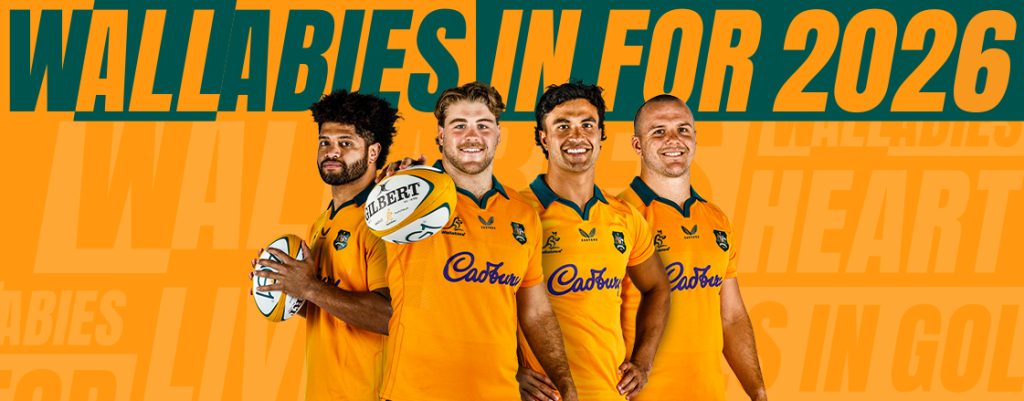
Photo Credit: Wallabies / Facebook

Round-of-16 matches on Saturday 23 October and Sunday 24 October will determine quarter-final participants, with specific matchups dependent on pool stage results. The knockout format ensures winning teams advance whilst eliminating defeated sides from tournament contention.

Brisbane’s quarter-finals on Saturday 30 October and Sunday 31 October represent the tournament’s critical juncture, determining the final four teams competing for the Webb Ellis Cup. These fixtures carry heightened significance as they decide which nations advance to semi-finals in Sydney.

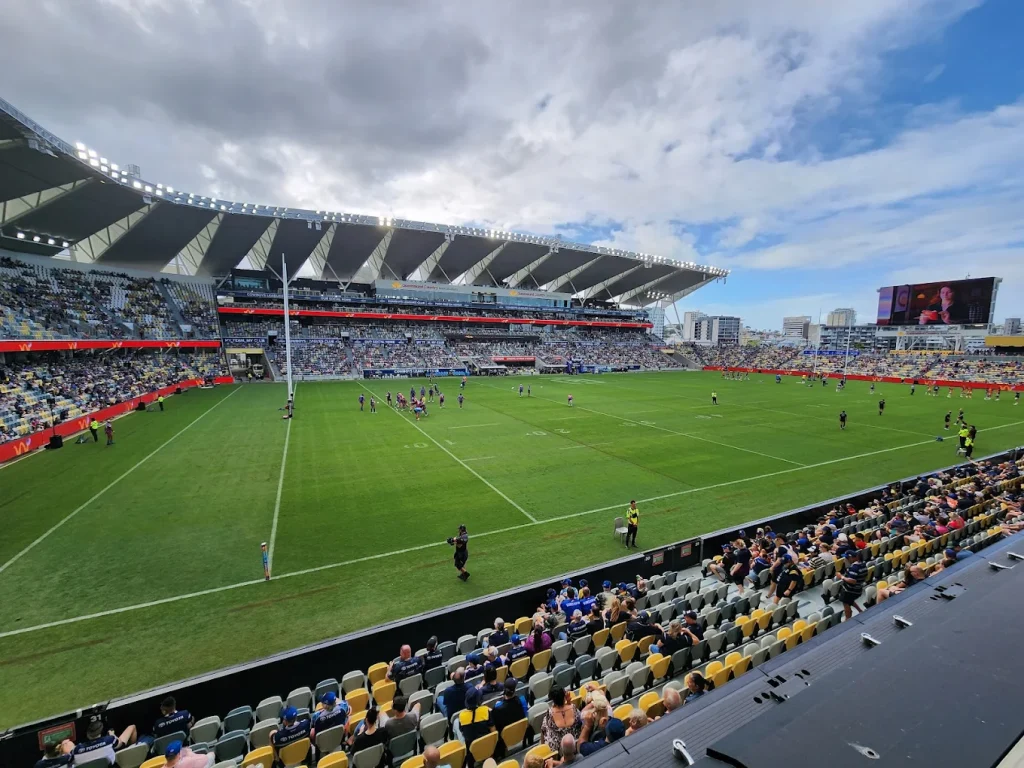
Townsville’s Queensland Country Bank Stadium hosts four pool matches, featuring Georgia versus Romania on Sunday 3 October, Chile versus Hong Kong China on Saturday 9 October, Tonga versus Zimbabwe on Friday 15 October, and Spain versus Canada on Saturday 16 October. The regional Queensland fixtures extend tournament benefits beyond Brisbane whilst showcasing North Queensland’s sporting infrastructure.

Queensland Country Bank Stadium
Photo Credit: Paul Teichert / Google Maps

Economic Impact and Tourism Planning

Queensland tourism authorities project the games will generate $212 million in economic benefit through visitor expenditure across accommodation, dining, entertainment, and transport sectors.

Brisbane accommodation providers expect significant demand surges surrounding quarter-final weekend, with advance bookings essential for securing preferred locations. The tournament occurs during Australian spring, when Brisbane experiences daytime temperatures averaging 18-28°C with low rainfall probability.

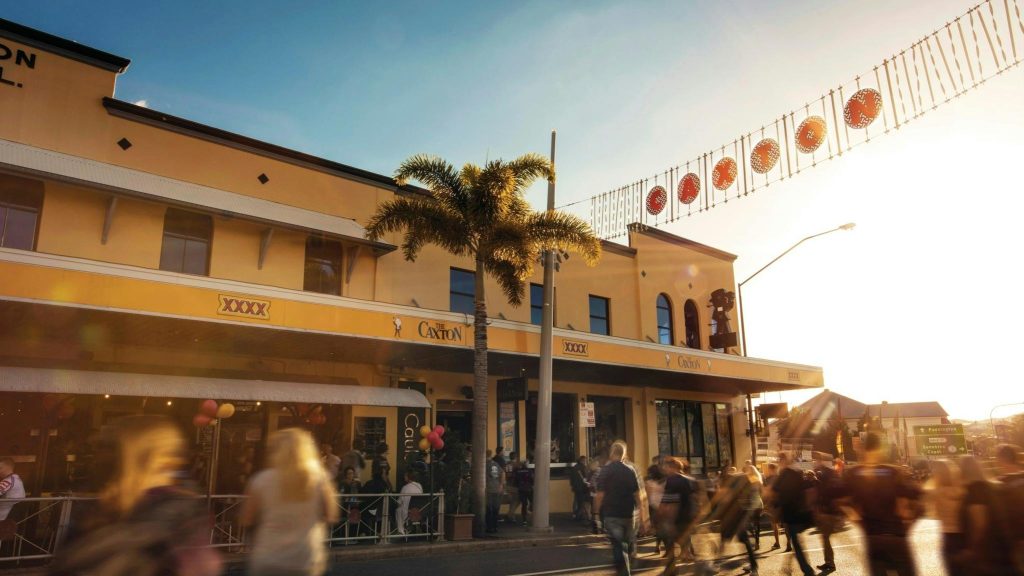
Brisbane’s designation as host city positions the region for international broadcast exposure reaching hundreds of millions of viewers globally. Caxton Street’s precinct of sports bars, pubs, and restaurants surrounding Suncorp Stadium creates pre-match atmosphere that enhances matchday experience.

Caxton Street
Photo Credit: Caxton Street / Visit Brisbane

Milton Stadium Ready for Global Audience

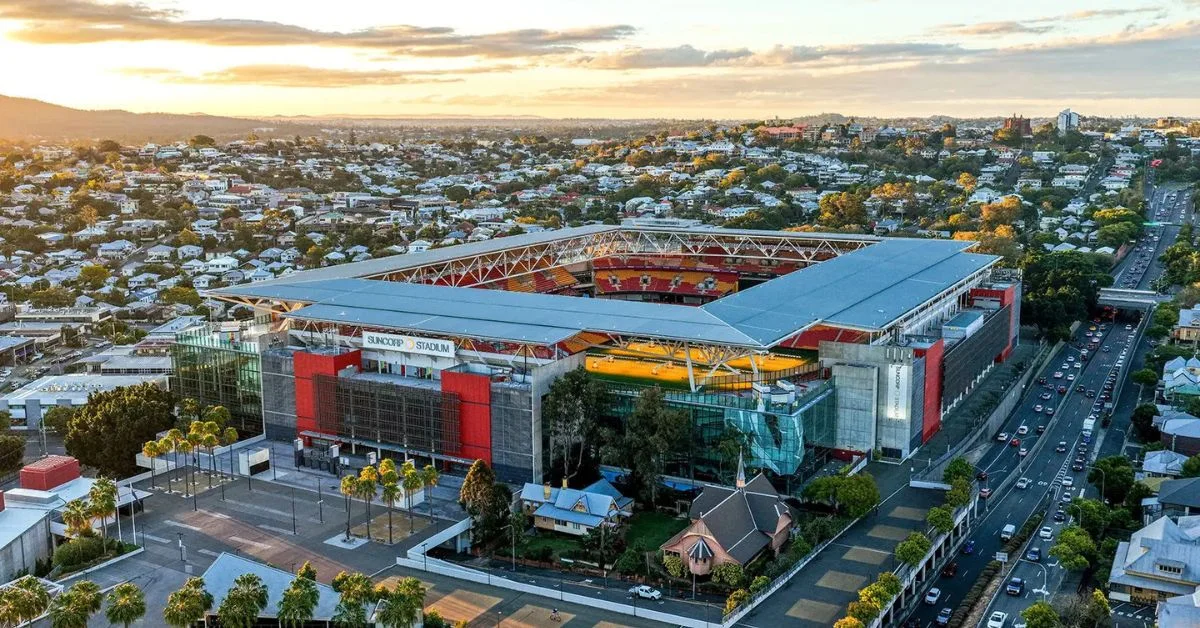
Suncorp Stadium‘s selection as a major Rugby World Cup venue reflects its established reputation as one of rugby’s premier facilities. The Milton precinct stadium, officially known as Brisbane Stadium during the tournament due to naming rights protocols, last hosted Rugby World Cup matches in 2003 when nine fixtures drew capacity crowds.

Suncorp stadium
Photo Credit: Suncorp Stadium

The venue’s nickname “The Cauldron” derives from its atmospheric intensity, with three-tiered seating positioning spectators within six metres of the sideline at closest points. This colosseum-style design creates acoustics that amplify crowd noise, establishing the stadium’s reputation for intimidating visiting teams.

Suncorp Stadium underwent comprehensive redevelopment in the early 2000s, transforming from a 40,000-capacity ground with terracing into the current all-seater configuration. The $280 million modernisation completed in 2003 created facilities that have since hosted rugby league’s 2008 and 2017 World Cup finals, NRL Grand Finals, State of Origin matches, and international rugby union fixtures.

The stadium’s rugby credentials extend beyond infrastructure. Queensland Reds relocated from historic Ballymore Stadium to Suncorp in 2005, establishing the venue as Queensland’s premier rugby union destination. Regular Wallabies Test matches have created familiarity for Australia’s national team, providing home advantage during World Cup fixtures.

New Zealand rugby journalist Wynne Gray described Suncorp Stadium as potentially the world’s best rugby venue, noting the intimate atmosphere allows spectators to hear physical collisions and boot strikes on ball. Comparisons to Cardiff’s Millennium Stadium and London’s Twickenham Stadium reflect the venue’s international standing.

Transport Infrastructure and Access

Milton Railway Station sits 350 metres from Suncorp Stadium via dedicated pedestrian walkway, providing direct rail access from Brisbane CBD and suburban stations. Special event services operate before and after matches, with increased frequency managing spectator volumes.

Roma Street Railway Station, located 1.2 kilometres from the venue, serves as Brisbane’s major rail hub, connecting interstate services with suburban networks. Multiple bus routes stop on Caxton Street adjacent to the stadium, including services 375, 379, 385, 470, 475, 476, and 477.

CityCat ferry services to North Quay terminal provide water-based transport option, with 15-minute walks through CBD reaching Suncorp Stadium. TransLink’s Go Card system provides integrated ticketing across train, bus, and ferry services.

Victoria Bridge and Goodwill Bridge provide pedestrian and cycling links between South Bank and CBD. The 2-kilometre distance from Queen Street Mall to Suncorp Stadium accommodates pre-match walks through Caxton Street’s hospitality precinct.

Stadium History and Heritage

Lang Park, Suncorp Stadium’s historical name, was established in 1914 on former North Brisbane Cemetery grounds. The site’s transformation from burial ground to recreation space followed Queensland redevelopment plans serving surrounding suburbs.

Reverend John Dunmore Lang provided the park’s original naming. Early Lang Park hosted diverse sports including cycling and athletics before rugby league’s dominance emerged. Brisbane Rugby League assumed the park lease in 1957, establishing the venue as Queensland rugby league’s home.

Suncorp Stadium / Lang Park
Photo Credit: Suncorp Stadium

The stadium suffered significant damage during 2010-2011 Queensland floods when the entire playing field submerged. $16 million repair costs addressed flood impacts, with works completed the following year.

Aboriginal community connections include rugby league Immortal Arthur Beetson leading Queensland onto the field for the inaugural State of Origin match, linking indigenous heritage with the stadium’s rugby legacy.

Suncorp Stadium’s redevelopment eliminated car parking—Australia’s first major sporting facility taking this approach. Pedestrian links to Milton station and CBD replaced vehicle access, positioning surrounding pubs and restaurants as matchday destinations whilst reducing traffic impacts.

Ticket Access and Presale Information

Rugby World Cup 2027 ticket presale will commence on 18 February 2026, providing registered fans priority access before general sale. The Superfan Pass at $750 offers guaranteed access to purchase up to four tickets for any of the 52 tournament matches (match ticket costs are additional).

Ticket categories span general admission through premium hospitality options, with pricing reflecting match significance. Quarter-final fixtures command higher rates than pool stage games.

Official travel packages through authorised agents combine match tickets with accommodation and transport. Brisbane-specific packages focus on quarter-final weekend, with accommodation emphasising proximity to Milton station and CBD for easy stadium access.

Legacy and Future Events

Rugby World Cup 2027 forms part of Australian rugby’s “golden decade” including British and Irish Lions tour in 2025, Women’s Rugby World Cup 2029, and Brisbane 2032 Olympics. Queensland’s tournament involvement provides operational testing for Brisbane 2032 infrastructure and event management protocols.

Suncorp Stadium’s versatility across rugby codes, football, and concerts demonstrates economic sustainability. Regular NRL fixtures, Queensland Reds Super Rugby matches, and State of Origin events maintain consistent activation. NRL Magic Round attracted 149,329 attendees in 2025, showcasing Brisbane’s capacity for concentrated sporting programmes.

Community rugby participation initiatives tied to tournament hosting aim to inspire 200,000 new Australian rugby participants by 2029, creating sustainable legacy beyond professional competition.


Published 07-February-2026.

Frew Park Keeps Milton’s Tennis Story Alive

Walk through Frew Park today and you’ll see a green pocket of Milton that’s built for everyday life — a place for picnics, play, and a casual hit of tennis. It looks and feels like a modern neighbourhood park, but it carries a history that made Milton one of Australia’s significant tennis venues.

Long before Brisbane’s major tennis events were staged at Tennyson, Milton hosted Queensland’s best-known tennis venue.

A suburb with tennis in its foundations

Milton has long been a suburb shaped by sport and big events. For much of the 20th century, tennis was part of that identity, and not just at a local level.

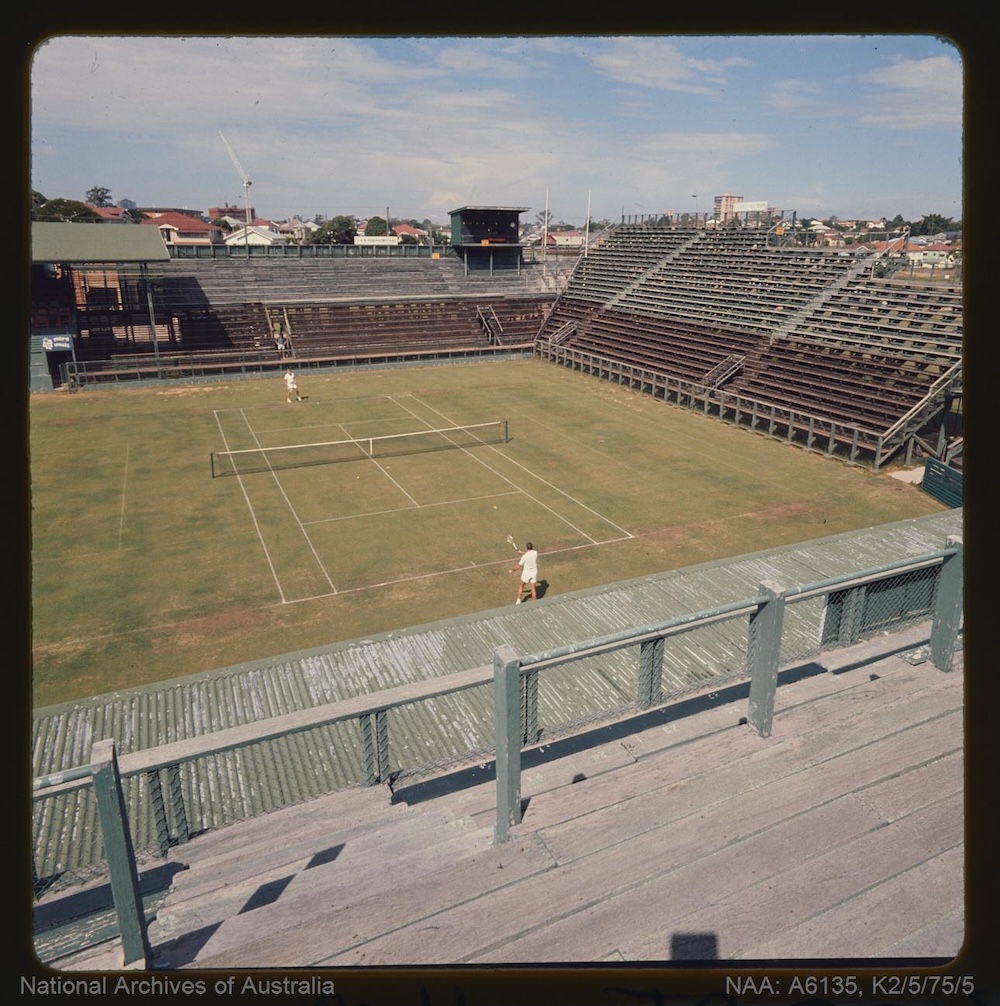
At the centre was the Milton Tennis Centre, which opened in 1915 and hosted major tournaments and international ties for many decades. Over time, the courts at Milton became known for staging major events, including Davis Cup ties, that drew attention well beyond the suburb itself.

If Queensland tennis had a long-term home base through much of the last century, Milton was it.

Davis Cup
Photo Credit: Wikipedia/CC BY 2.0

A history that’s well documented

Even now, Milton’s tennis story isn’t hard to trace because so much of it has been recorded and preserved.

The State Library of Queensland has highlighted the breadth of Queensland tennis material tied to this history, including photographs and printed items that reflect decades of tennis culture in the state.

Those records point to something larger than match results: tennis as a major part of public life and entertainment in earlier decades in Brisbane.

Milton’s place in the national tennis story

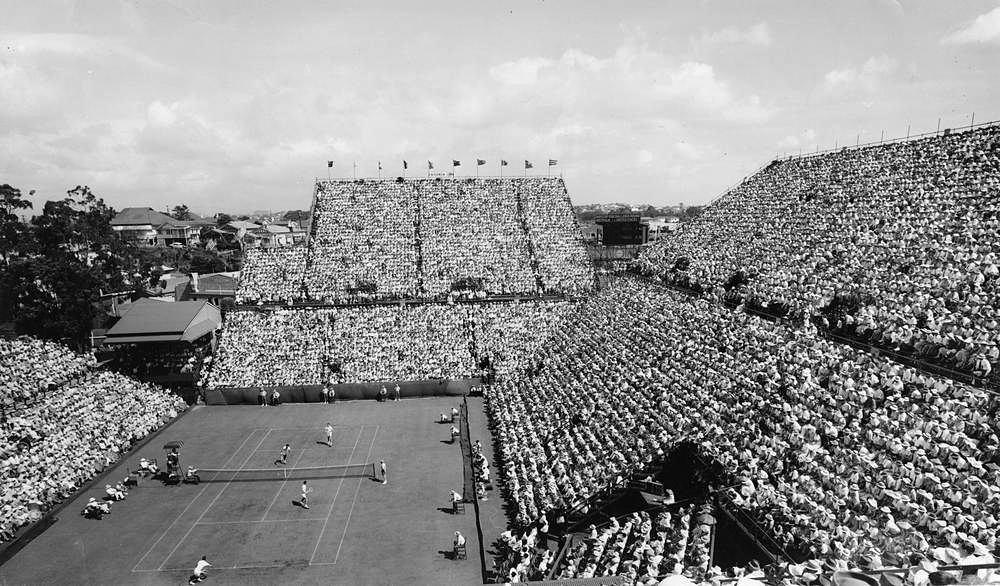
Milton’s tennis history also connects directly to the national timeline. The suburb hosted the 1969 Australian Open, known as the first Open-era edition of the tournament.

That alone places Milton among Australia’s landmark venues, not simply as a suburban facility, but as a site trusted to host one of tennis’s biggest events.

Rod Laver in action at Milton, 1969
Photo Credit: State Library of Queensland 

From Milton Tennis Centre to Frew Park

By the end of the 1990s, the Milton Tennis Centre era had come to a close. But the story didn’t end with demolition or closure. Instead, the site shifted into a new chapter as a public park, while still keeping tennis woven into its identity.

Frew Park, formerly the Milton Tennis Centre’s site, retained its tennis connections, including the Roy Emerson Tennis Centre and Wendy Turnbull Green. The State Library of Queensland also notes that the site’s redevelopment included a new tennis centre with courts on the grounds of the former venue.

A legacy that still has a place in Milton

Today, Frew Park represents a different kind of sporting legacy — one that sits inside the daily life of the suburb rather than outside it. It’s a reminder that Milton’s tennis history isn’t only something to look back on.

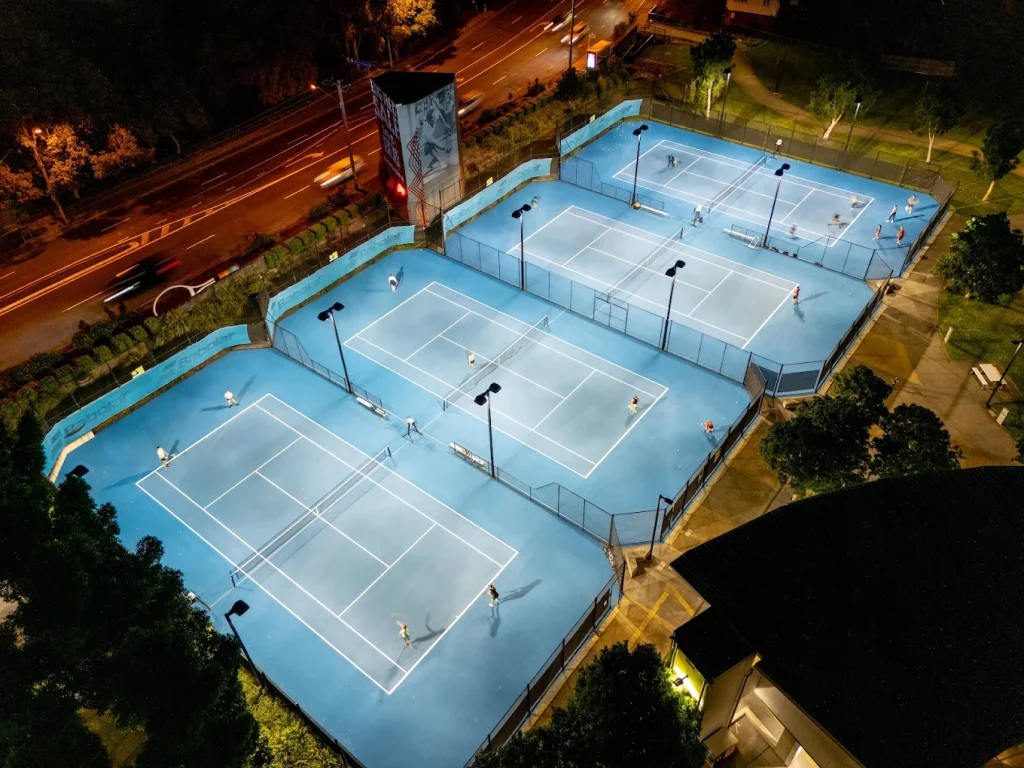
The suburb still hosts tennis on the same site where Queensland’s biggest tennis venue once stood. The Roy Emerson Tennis Centre remains active as a competition venue and is listed as a Tennis Brisbane centre for players of all ages and standards. 

Brisbane’s centre court may have shifted over time, but Milton’s tennis chapter still matters, not only for what happened here, but for how the suburb continues to carry that identity forward.


Published 15-Jan-2026

Planning for Suncorp Stadium Upgrades to Tap AI Technology

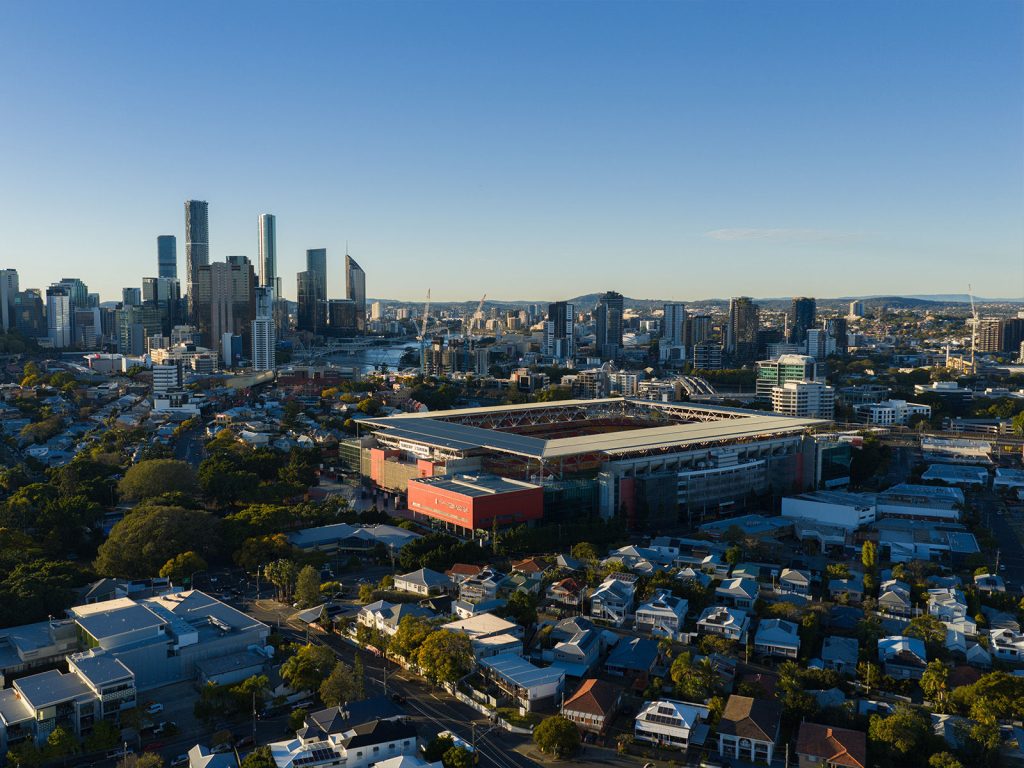
Suncorp Stadium in Milton is being assessed for a potential technology-led refurbishment, with artificial intelligence identified as a key tool to improve event operations and spectator experience ahead of the 2032 Brisbane Olympics.


First Major Refurbishment Since 2003

Suncorp Stadium has not undergone a major refurbishment since 2003, and planning discussions are now examining how the venue could be modernised to meet future event requirements. The review forms part of broader considerations about how the stadium will continue to operate as a major sporting and entertainment venue in Milton.

The stadium seats 52,500 patrons and is located close to Brisbane’s CBD, supported by surrounding entertainment precincts and established public transport infrastructure. Its configuration as a rectangular venue places spectators close to the field of play.

Artificial Intelligence At The Centre Of Planning

Venue operator Legends Global has been compiling upgrade concepts informed by stadiums it manages internationally. These concepts include the use of artificial intelligence systems to improve how large-scale events are delivered.

The proposed technology focuses on improving efficiency during event changeovers, particularly between sporting fixtures and concerts. These systems are intended to reduce operational costs for major events while maintaining venue standards.

AI stadium technology
Photo Credit: Pexels

Playing Surface And Operational Efficiency

Upgrade discussions also include the use of technology to better manage and maintain the playing surface. Protecting turf quality is considered important for a venue that hosts frequent sporting fixtures alongside concerts and other non-sport events.

Improved surface management is viewed as a way to support year-round scheduling without compromising field conditions.

Structural Options Remain Under Discussion

Broader ideas such as installing a roof or expanding seating capacity have been referenced as part of long-standing discussions. These options are subject to detailed cost–benefit analysis, with no confirmed decision or design announced.

The material provided indicates that these structural proposals remain unconfirmed and under consideration only.

Milton Suncorp Stadium
Photo Credit: Wikipedia

Ongoing Role As A Major Events Venue

Suncorp Stadium hosts four anchor tenants and is a regular venue for major annual sporting events, national team fixtures, and international entertainment acts. The stadium is operated by Legends Global and remains a central part of Queensland’s major events calendar.

What Happens Next


Planning and evaluation for a potential upgrade of Suncorp Stadium in Milton are continuing. No construction timeline, final scope, or approved design has been confirmed based on the available sources.

Published 29-Dec-2025

Global Tour Brings Lady Gaga’s MAYHEM Ball to Milton

Lady Gaga will perform at Suncorp Stadium in Milton as part of her global MAYHEM Ball tour, marking her first live Australian appearance in over a decade.


A Decade Away: Gaga’s First Aussie Shows Since 2014

Lady Gaga is returning to Australia for the first time in 11 years with three stadium performances, including a show in Milton at Brisbane’s Suncorp Stadium. Her last visit in 2014 featured arena shows only, with the ARTPOP Ball tour. The 2025 visit includes stadiums for the first time in her Australian touring history.

Her new album, “Mayhem,” which the tour supports, debuted at number one on the ARIA Albums Chart and the US Billboard 200. It also marked her biggest streaming debut, recording 240 million streams globally in its first week.

The Mayhem Ball Milton
Photo Credit: Lady Gaga/Instagram

Beyond the Stage: Lady Gaga’s Global Profile

Stefani Joanne Angelina Germanotta, known professionally as Lady Gaga, has established a multi-dimensional career spanning music, film, business, and activism. With estimated global record sales of 170 million, she remains one of the world’s best-selling artists. 

Gaga is also recognised for her philanthropic efforts, having contributed to relief campaigns following major global crises including the 2010 Haiti earthquake, the 2011 Tōhoku tsunami, and Hurricane Sandy. Her televised 2020 fundraiser, “One World: Together at Home,” raised $127 million for COVID-19 response efforts.

Through the Born This Way Foundation, launched in 2012, Gaga has led initiatives supporting youth mental health, emotional intelligence, and kindness campaigns. 

Mayhem tour
Photo Credit: Lady Gaga/Instagram

A long-time advocate for LGBTQ rights, Gaga has actively supported anti-bullying legislation, spoken out against discriminatory policies, and amplified LGBTQ representation globally. She has been recognised by several organisations for her advocacy, including receiving the LennonOno Grant for Peace and the Yolanda Denise King High Ground Award.

Gaga’s influence is also evident in fashion, digital media, and higher education, with multiple institutions offering academic courses analysing her impact on culture, gender, and identity. Her legacy includes being the only female artist with four singles selling over 10 million copies each, and having six of her studio albums debut at number one in the US.

Milton Goes Monster: What to Know About the Show

Gaga’s Milton performance is scheduled at Suncorp Stadium on Tuesday, 9 December 2025, from 7:30 p.m. The venue will operate under its standard event policies, including mandatory tickets for all attendees and supervision requirements for children under 12.

Standing areas are available, though not recommended for patrons under 15 due to sightline and crowd density issues. The ticket limit per customer is four for presales and eight for general release, which opens Thursday, 17 April.

Lady Gaga
Photo Credit: Lady Gaga/Instagram

From Vegas to Milton: The MAYHEM Ball Tour Expands

The MAYHEM Ball officially begins on 16 July 2025 in Paradise, Nevada. Nine promotional performances in international cities will precede the full tour launch. A total of 48 shows will run through to 12 December, concluding in Sydney.

Announced on 26 March 2025, the tour rapidly expanded from an initial 32 shows due to strong demand. Billboard projects the tour could gross between $100 million and $125 million.

Though originally favouring arena venues to maintain production control, Gaga added the Australian stadium shows following the success of “Mayhem” and fan demand.

The Final Note


Milton’s Suncorp Stadium show will be one of three major Australian events marking Lady Gaga’s return to local stages. As her only Queensland appearance, the Milton show is expected to draw fans from across the region. With the broader tour receiving strong commercial backing, the Australian leg highlights the artist’s enduring reach.

Updated 30-November-2025