



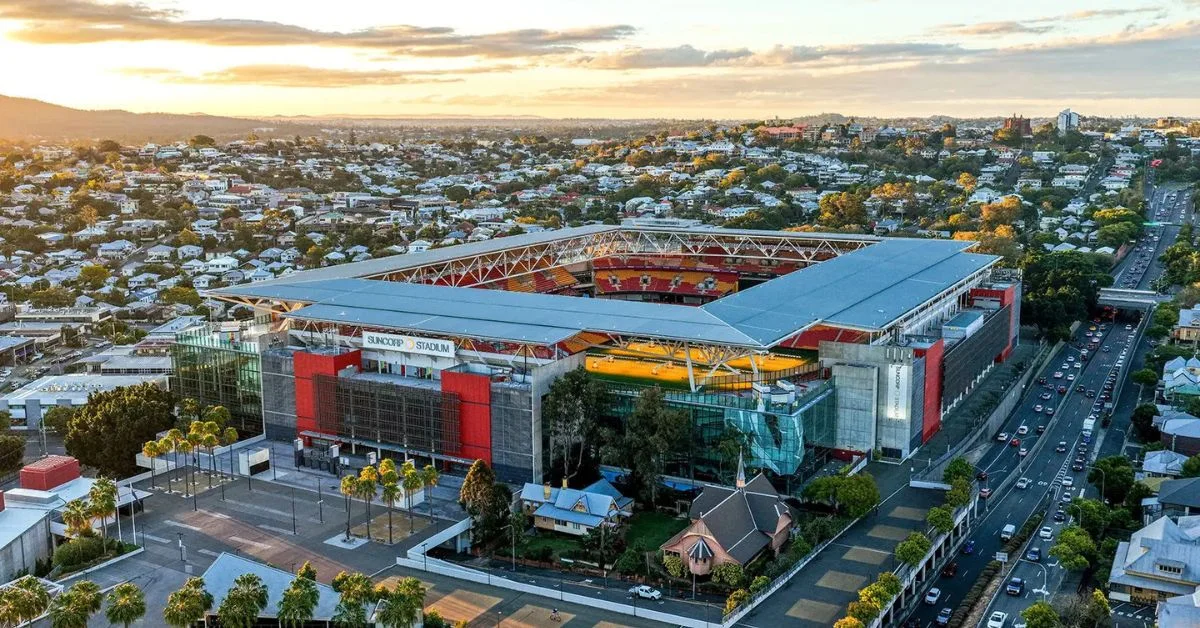
Milton’s Suncorp Stadium will host 10 matches during the Rugby World Cup 2027, including two quarter-finals, as Brisbane prepares to welcome international rugby fans between October and November 2027.
The match schedule released this week confirms the 52,500-capacity venue will stage six pool matches, two round-of-16 fixtures, and two quarter-finals as part of the expanded 24-team tournament running from 1 October to 13 November 2027.

Brisbane’s fixtures include England versus Tonga on Saturday 2 October, followed by pool matches featuring Argentina, Canada, France, Japan, South Africa, Georgia, Scotland, and Portugal. Australia’s Wallabies will face Chile on Saturday 16 October in a highly-anticipated home fixture.
The tournament represents Queensland’s largest rugby event before the Brisbane 2032 Olympic and Paralympic Games, with projected economic impact of $212 million across accommodation, hospitality, and tourism sectors.

Tournament Schedule and Matchups
Brisbane’s Rugby World Cup programme opens with England facing Tonga on Saturday 2 October, launching Queensland’s tournament involvement. Pool stage matches continue throughout October, featuring established rugby powers and developing nations.

Argentina meets Canada on Monday 4 October, followed by France versus Japan on Saturday 9 October. South Africa takes on Georgia the following day, establishing a weekend of high-calibre rugby across multiple weight divisions.
Australia’s Wallabies fixture against Chile on Saturday 16 October provides Brisbane audiences with direct involvement in the host nation’s campaign. Scotland faces Portugal on Sunday 17 October, completing the pool stage schedule.

Round-of-16 matches on Saturday 23 October and Sunday 24 October will determine quarter-final participants, with specific matchups dependent on pool stage results. The knockout format ensures winning teams advance whilst eliminating defeated sides from tournament contention.


Brisbane’s quarter-finals on Saturday 30 October and Sunday 31 October represent the tournament’s critical juncture, determining the final four teams competing for the Webb Ellis Cup. These fixtures carry heightened significance as they decide which nations advance to semi-finals in Sydney.
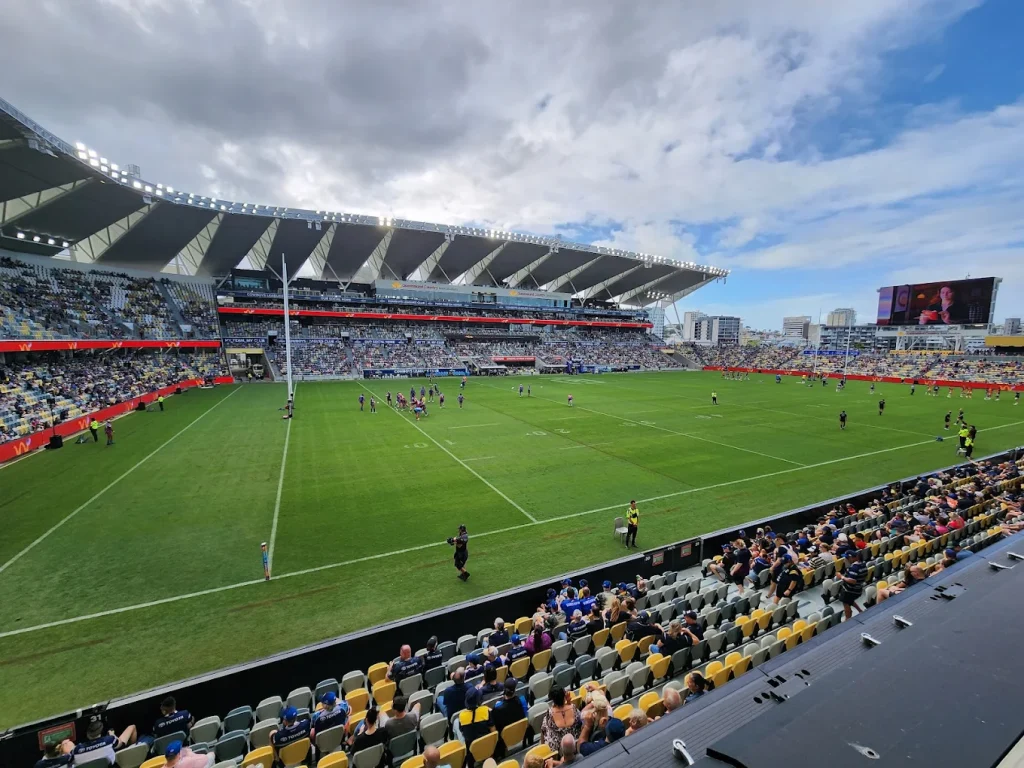
Townsville’s Queensland Country Bank Stadium hosts four pool matches, featuring Georgia versus Romania on Sunday 3 October, Chile versus Hong Kong China on Saturday 9 October, Tonga versus Zimbabwe on Friday 15 October, and Spain versus Canada on Saturday 16 October. The regional Queensland fixtures extend tournament benefits beyond Brisbane whilst showcasing North Queensland’s sporting infrastructure.
Economic Impact and Tourism Planning
Queensland tourism authorities project the games will generate $212 million in economic benefit through visitor expenditure across accommodation, dining, entertainment, and transport sectors.
Brisbane accommodation providers expect significant demand surges surrounding quarter-final weekend, with advance bookings essential for securing preferred locations. The tournament occurs during Australian spring, when Brisbane experiences daytime temperatures averaging 18-28°C with low rainfall probability.
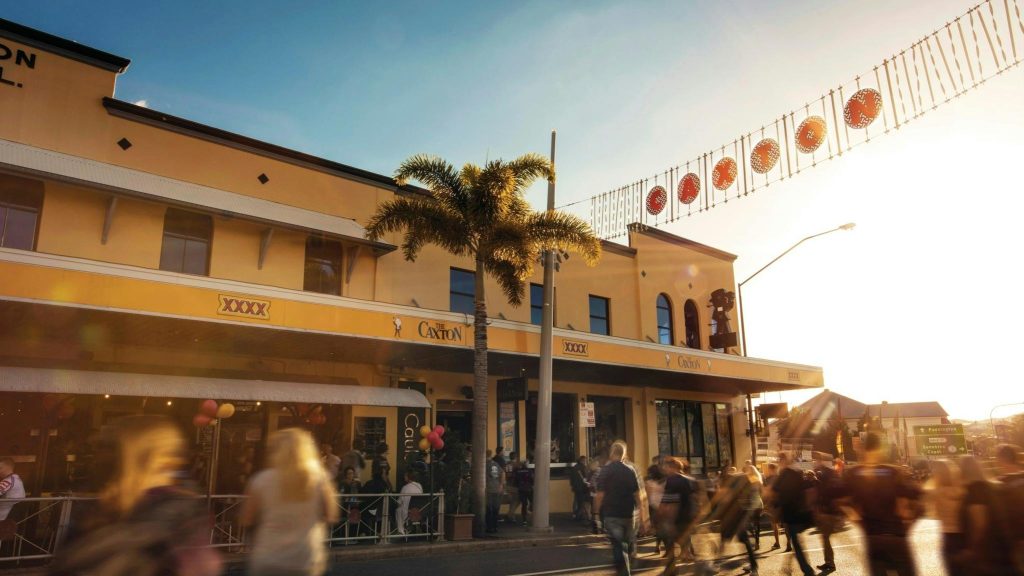
Brisbane’s designation as host city positions the region for international broadcast exposure reaching hundreds of millions of viewers globally. Caxton Street’s precinct of sports bars, pubs, and restaurants surrounding Suncorp Stadium creates pre-match atmosphere that enhances matchday experience.
Milton Stadium Ready for Global Audience
Suncorp Stadium‘s selection as a major Rugby World Cup venue reflects its established reputation as one of rugby’s premier facilities. The Milton precinct stadium, officially known as Brisbane Stadium during the tournament due to naming rights protocols, last hosted Rugby World Cup matches in 2003 when nine fixtures drew capacity crowds.
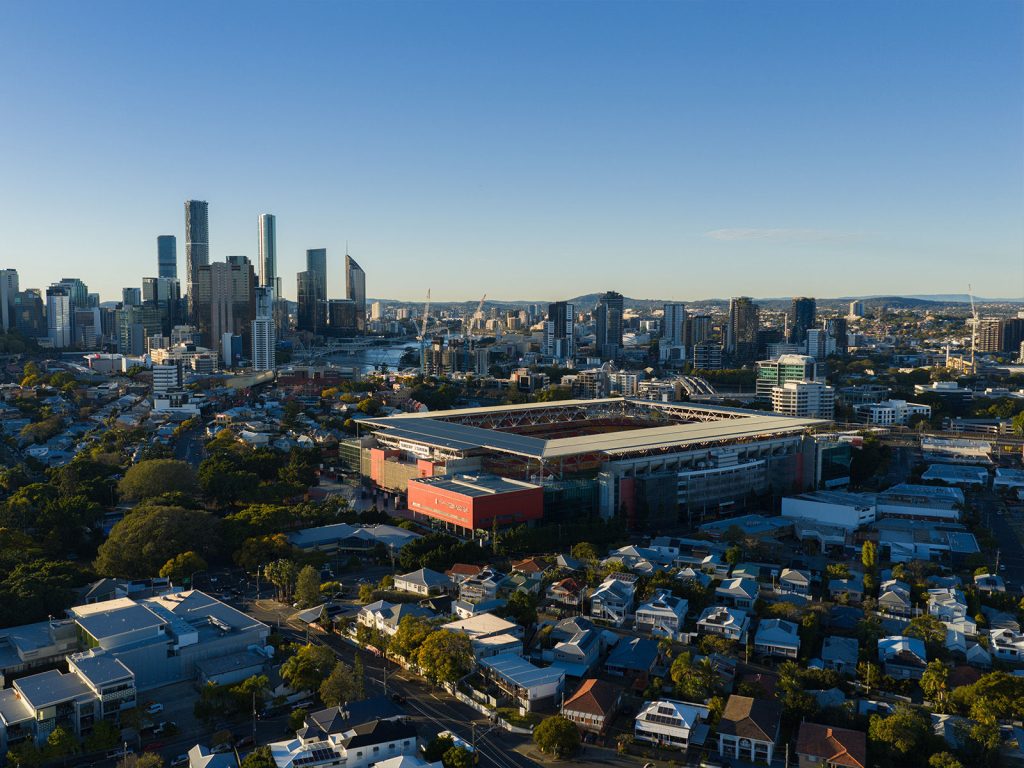
The venue’s nickname “The Cauldron” derives from its atmospheric intensity, with three-tiered seating positioning spectators within six metres of the sideline at closest points. This colosseum-style design creates acoustics that amplify crowd noise, establishing the stadium’s reputation for intimidating visiting teams.
Suncorp Stadium underwent comprehensive redevelopment in the early 2000s, transforming from a 40,000-capacity ground with terracing into the current all-seater configuration. The $280 million modernisation completed in 2003 created facilities that have since hosted rugby league’s 2008 and 2017 World Cup finals, NRL Grand Finals, State of Origin matches, and international rugby union fixtures.
The stadium’s rugby credentials extend beyond infrastructure. Queensland Reds relocated from historic Ballymore Stadium to Suncorp in 2005, establishing the venue as Queensland’s premier rugby union destination. Regular Wallabies Test matches have created familiarity for Australia’s national team, providing home advantage during World Cup fixtures.
New Zealand rugby journalist Wynne Gray described Suncorp Stadium as potentially the world’s best rugby venue, noting the intimate atmosphere allows spectators to hear physical collisions and boot strikes on ball. Comparisons to Cardiff’s Millennium Stadium and London’s Twickenham Stadium reflect the venue’s international standing.
Transport Infrastructure and Access
Milton Railway Station sits 350 metres from Suncorp Stadium via dedicated pedestrian walkway, providing direct rail access from Brisbane CBD and suburban stations. Special event services operate before and after matches, with increased frequency managing spectator volumes.
Roma Street Railway Station, located 1.2 kilometres from the venue, serves as Brisbane’s major rail hub, connecting interstate services with suburban networks. Multiple bus routes stop on Caxton Street adjacent to the stadium, including services 375, 379, 385, 470, 475, 476, and 477.
CityCat ferry services to North Quay terminal provide water-based transport option, with 15-minute walks through CBD reaching Suncorp Stadium. TransLink’s Go Card system provides integrated ticketing across train, bus, and ferry services.
Victoria Bridge and Goodwill Bridge provide pedestrian and cycling links between South Bank and CBD. The 2-kilometre distance from Queen Street Mall to Suncorp Stadium accommodates pre-match walks through Caxton Street’s hospitality precinct.
Stadium History and Heritage
Lang Park, Suncorp Stadium’s historical name, was established in 1914 on former North Brisbane Cemetery grounds. The site’s transformation from burial ground to recreation space followed Queensland redevelopment plans serving surrounding suburbs.
Reverend John Dunmore Lang provided the park’s original naming. Early Lang Park hosted diverse sports including cycling and athletics before rugby league’s dominance emerged. Brisbane Rugby League assumed the park lease in 1957, establishing the venue as Queensland rugby league’s home.
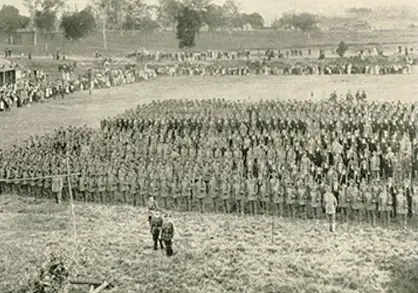
The stadium suffered significant damage during 2010-2011 Queensland floods when the entire playing field submerged. $16 million repair costs addressed flood impacts, with works completed the following year.
Aboriginal community connections include rugby league Immortal Arthur Beetson leading Queensland onto the field for the inaugural State of Origin match, linking indigenous heritage with the stadium’s rugby legacy.
Suncorp Stadium’s redevelopment eliminated car parking—Australia’s first major sporting facility taking this approach. Pedestrian links to Milton station and CBD replaced vehicle access, positioning surrounding pubs and restaurants as matchday destinations whilst reducing traffic impacts.
Ticket Access and Presale Information
Rugby World Cup 2027 ticket presale will commence on 18 February 2026, providing registered fans priority access before general sale. The Superfan Pass at $750 offers guaranteed access to purchase up to four tickets for any of the 52 tournament matches (match ticket costs are additional).
Ticket categories span general admission through premium hospitality options, with pricing reflecting match significance. Quarter-final fixtures command higher rates than pool stage games.
Official travel packages through authorised agents combine match tickets with accommodation and transport. Brisbane-specific packages focus on quarter-final weekend, with accommodation emphasising proximity to Milton station and CBD for easy stadium access.
Legacy and Future Events
Rugby World Cup 2027 forms part of Australian rugby’s “golden decade” including British and Irish Lions tour in 2025, Women’s Rugby World Cup 2029, and Brisbane 2032 Olympics. Queensland’s tournament involvement provides operational testing for Brisbane 2032 infrastructure and event management protocols.
Suncorp Stadium’s versatility across rugby codes, football, and concerts demonstrates economic sustainability. Regular NRL fixtures, Queensland Reds Super Rugby matches, and State of Origin events maintain consistent activation. NRL Magic Round attracted 149,329 attendees in 2025, showcasing Brisbane’s capacity for concentrated sporting programmes.
Community rugby participation initiatives tied to tournament hosting aim to inspire 200,000 new Australian rugby participants by 2029, creating sustainable legacy beyond professional competition.
Published 07-February-2026.