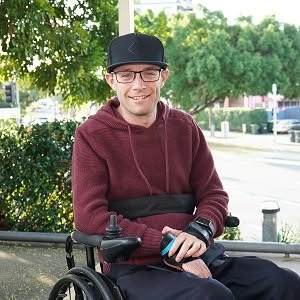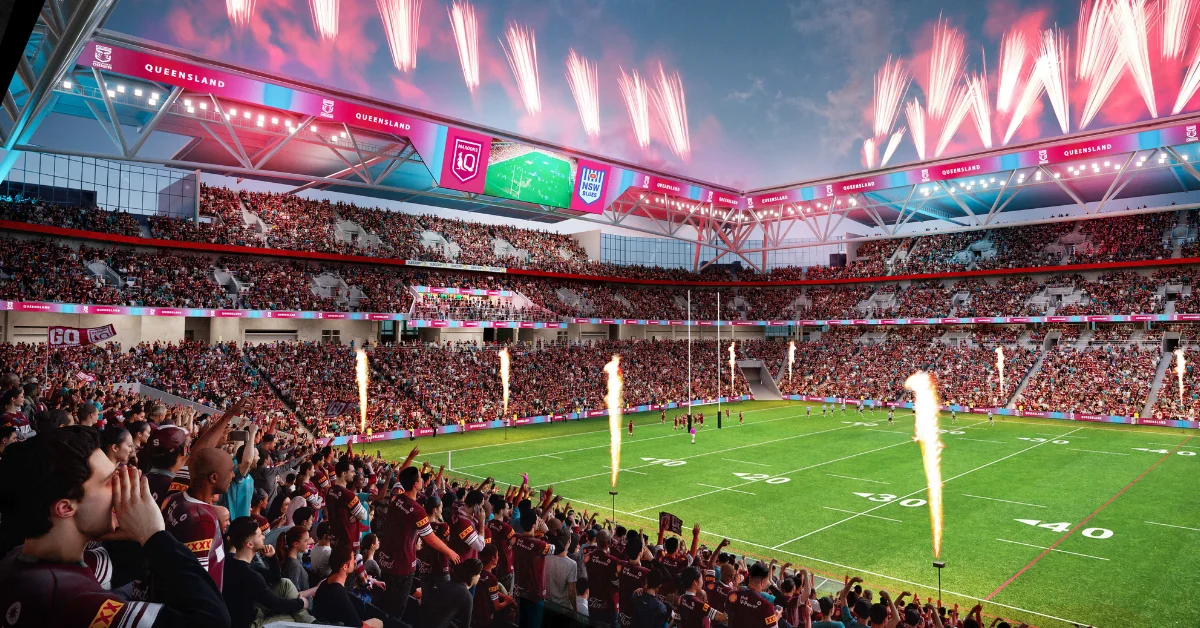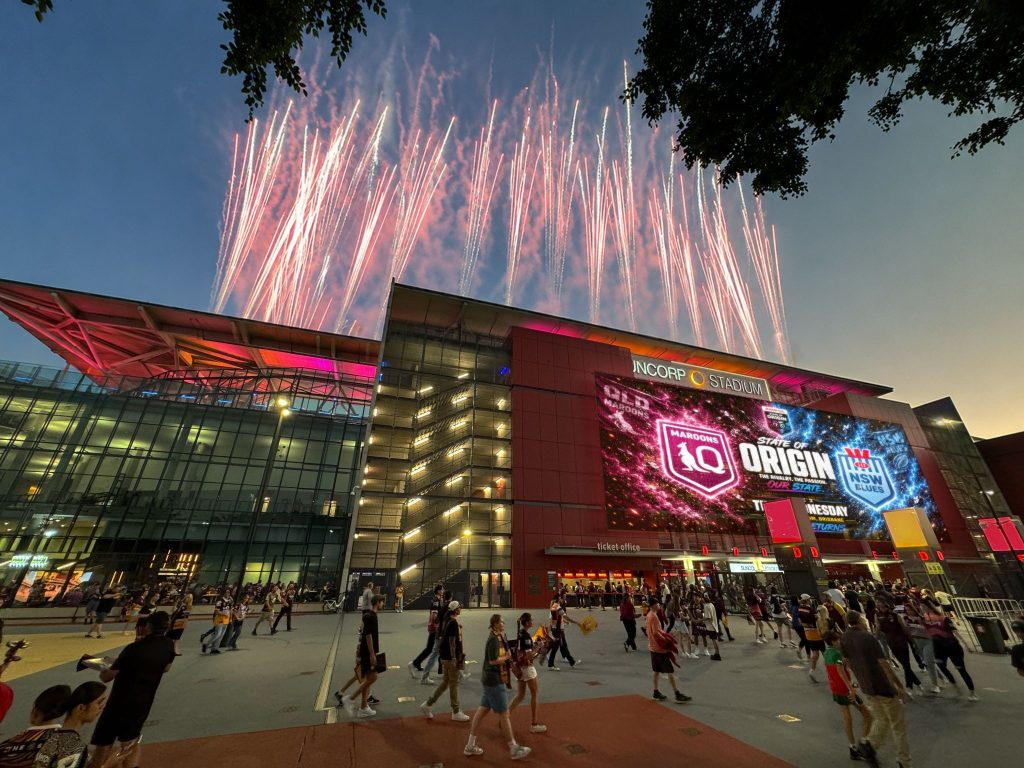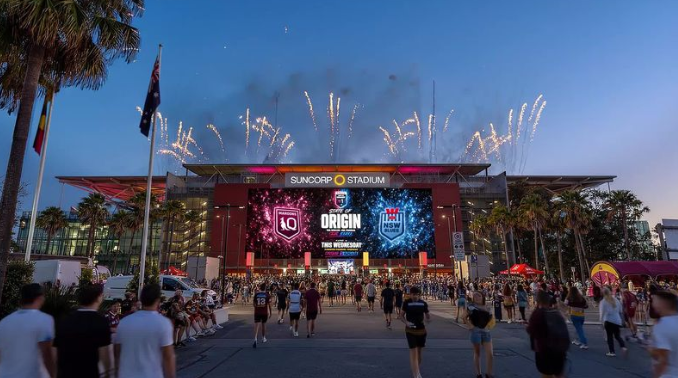



Students from the Brisbane Broncos Sport Business Institute are gaining hands-on experience at Suncorp Stadium, working behind the scenes during live Brisbane Broncos matches as part of their sport industry training.
Students enrolled in the Brisbane Broncos Sport Business Institute are stepping into live event environments at Suncorp Stadium, contributing to matchday operations during National Rugby League fixtures.
The program is delivered in partnership with TAFE Queensland and the Brisbane Broncos, providing students with exposure across corporate hospitality, marketing, game day operations and community-related activities.
During a recent fixture between the Broncos and Dolphins, around 50 students worked across the venue, supporting various aspects of the live event.
Photo Credit: Brisbane Broncos
Inside The Matchday Experience
Students took on a range of responsibilities that contributed to the delivery of the matchday environment, including assisting with the setup of activity areas, corporate spaces and sections connected to team operations.
Their involvement extended beyond the pre-game period, with post-match tasks carried out on the field to ensure items were prepared for players to distribute to fans.
This experience allowed students to engage directly with the operational side of a major sporting event, gaining practical insight into how different elements come together on game day.
Learning Through Real-World Placement
The placement forms part of a dual diploma program combining leadership, management and sport, with students required to complete 100 hours of industry-based experience as part of their studies.
Hands-on learning is integrated into the course structure, allowing participants to apply their studies in a live environment while developing familiarity with industry practices.
Students are supported throughout the program by the education team, who provide guidance across both the academic and practical components of the course.
Photo Credit: Brisbane Broncos
Pathways Into The Sport Industry
Working within a live National Rugby League setting provides students with exposure to real-time event delivery, helping build confidence and readiness for roles within the sport and events sector.
The experience contributes to the development of practical skills aligned with industry expectations, supporting students as they prepare to transition into the workforce.
Enrolments remain open for the next intake of the dual Diploma of Leadership and Management and Diploma of Sport, continuing to offer opportunities for students to gain experience within live sporting environments.
Milton will transform into a global music hub this spring as pop legend Robbie Williams secures Suncorp Stadium for a massive stop on his latest world tour.
This upcoming event marks a significant moment for the Milton area, with Suncorp Stadium preparing to welcome tens of thousands of fans for a Friday night performance. The concert is scheduled for 20 November, providing a boost to local energy as the city heads into the summer season.
Organisers expect a capacity crowd to fill the stands, turning the sporting precinct into a sea of singing fans. For many residents and business owners, the arrival of such a high-profile entertainer highlights the suburb’s role as the premier destination for world-class entertainment in Queensland.
Getting to the Heart of the Action
Because the venue is located in the heart of a busy residential and commercial hub, transport authorities are preparing for a heavy influx of visitors. Milton Station, which sits on the Queensland Rail City Network, will serve as the primary gateway for those attending the show.
To help keep the evening running smoothly, additional event services are typically scheduled across the bus, train, and ferry networks. Using public transport is encouraged to ensure that the streets of Milton remain manageable for locals and visitors alike during the Friday night rush.
The performer heading to Milton is one of the most successful artists in British history, with a career spanning three decades and 90 million album sales. Fans can expect a setlist packed with familiar songs that have become staples of radio and karaoke over the years.
This tour follows a period of renewed interest in his career, helped by a recent documentary series and a film about his life. The show is described as a celebration of his long history in the industry, mixing his classic anthems with material from his latest album to create a full-scale pop spectacle.
For those hoping to join the crowd in Milton, planning ahead is essential. Tickets for the Brisbane event will be available for purchase starting at staggered times on Thursday 26 March. Before the general public can buy them, several presale windows will open through official fan groups and touring partners like Frontier Touring and Telstra Plus.
Given the scale of the production and the artist’s reputation for high-energy performances, these seats are expected to be in high demand by fans from across the state
For long stretches, this felt like a Dolphins game. They had the ball. They had the metres. They had the momentum.
In front of 45,882 people, the biggest NRL crowd of the year, the Brisbane Broncos absorbed pressure, capitalised on key moments, and punished every Dolphins lapse to walk away 26–12 winners.
The Broncos won the Battle of Brisbane. Not because they had more of the game — but because they made more of it.
They finished with 53 per cent possession, 211 runs to Brisbane’s 186, and a dominant offload count of 26 to five. They broke more tackles, generated more second-phase play, and had three players run for more metres than any Bronco — Jake Averillo (238m), Kulikefu Finefeuiaki (222m) and Jamayne Isaako (196m).
That profile usually wins you games. On Friday night, it didn’t.
The Dolphins didn’t lack effort. They lacked conversion.
Thirteen errors killed momentum, often at the exact point pressure was building. Two first-half tries were wiped out — one for obstruction, one for a forward pass — turning early dominance into frustration.
This is where the game slipped.
The Dolphins were generating pressure but not cashing it in. The Broncos, by contrast, needed fewer chances — and took them.
That’s the entire difference.
Moments That Broke It Open
The shift came immediately after halftime.
First set. Drop from Francis Molo.
Within a minute, the Broncos had struck.
A broken defensive line, a sharp offload, and Reece Walsh was through — a moment of individual brilliance that cut through 40 minutes of Dolphins control. Walsh finished with 182 metres and 11 tackle breaks, repeatedly turning half-chances into genuine threats.
The Dolphins had been building.
The Broncos finished.
Then came the moment that ended it.
Down 16–12 and still in the contest, the Dolphins were defending a high bomb inside their own end. Jamayne Isaako and Hamiso Tabuai-Fidow both hesitated.
No call. No catch.
They let it bounce.
At this level, that’s fatal. The Broncos pounced, scored, and the game was effectively over.
High Risk, High Cost
The Dolphins’ attacking identity is clear.
They move the ball. They offload. They play fast and look to break games open through second-phase play.
It worked — to a point.
Those 26 offloads created pressure, but they also fed the error count. At times it felt less like controlled expansion and more like urgency spilling into chaos.
Selwyn Cobbo’s night captured that perfectly.
He ran hard for 181 metres and was heavily involved, but three key errors — including a dropped bomb near his own line and a forced offload under pressure — turned momentum back toward Brisbane at critical moments.
The intent was there.
The execution wasn’t.
Broncos Played the Right Game
The Broncos didn’t need to win the stat sheet.
They won the parts that matter.
Their middle held firm defensively, with Cory Paix and Patrick Carrigan combining for 52 tackles each, repeatedly absorbing pressure and resetting the line.
They were cleaner with the ball. More composed in key moments. More decisive when opportunities appeared.
That’s why the scoreboard reads 26–12.
Not dominance.
Control when it counted.
Reality Bites
This is the frustrating reality for the Dolphins.
They showed enough to suggest they can trouble anyone — their yardage, their offload game, their ability to generate pressure.
But right now, they are asking questions without finishing the answer.
The gap isn’t effort.
It’s timing. It’s composure. It’s execution in the moments that matter most.
Because in games like this, you don’t get rewarded for how much football you play.
Only for what you do with it.
Published 27-March-2026
PRE-MATCH REPORT
Battle of Brisbane: Broncos Tested as Dolphins Circle
Brisbane lead this rivalry 5–1.But it’s the one loss that matters.
The Dolphins’ 40–6 win late in 2024 didn’t just break the pattern. It showed how quickly the Broncos can be exposed when they lose control through the middle. That’s the reference point now heading into Friday night.
Kick-off is set for Friday, 27 March at 7:00PM AEST at Suncorp Stadium, with live coverage on Fox League and streaming available via Kayo Sports. The match is also listed for free-to-air broadcast on Channel 9 and 9Now.
The 5–1 Record — and the One Result That Changed the Tone
On paper, this rivalry has been one-sided.
Across those five wins, Brisbane controlled the key areas — ruck speed, field position and defensive discipline. They dictated tempo, limited second-phase play and closed games out when it mattered.
That’s the standard they’ve set in this match-up.
The question now is whether they can reproduce it under different conditions — without Haas, with changes through the middle, and against a Dolphins side that has already shown it can disrupt that control.
Team Changes (Key Ins and Outs)
This time, the changes matter. Brisbane have been forced into key adjustments ahead of the derby — none bigger than the loss of Payne Haas.
His absence reshapes the Broncos’ middle rotation, with Xavier Willison stepping into the starting front row and Brendan Piakura shifting into the back row. Adam Reynolds returns and brings control back into the spine, while Ben Hunt’s role adjusts to provide added flexibility around the ruck.
For the Dolphins, the focus is on reinforcing the middle without disrupting what’s already working.
Kenny Bromwich returns to the bench to add experience to the rotation, while Mark Nicholls is promoted into the starting side. Otherwise, the squad remains largely unchanged — giving them continuity heading into a high-pressure contest.
3 Things to Watch
1. Can Brisbane Win the Middle Without Haas?This is the game inside the game. Without Payne Haas, Brisbane lose their safest source of momentum. With Bromwich back and Nicholls starting, the Dolphins have reinforced their middle — and if they generate quick play-the-balls early, it puts immediate pressure on Brisbane’s defensive system.
2. Who Dictates the Tempo — and Handles the Stakes?Adam Reynolds will try to control territory and slow the game down. The Dolphins will look to speed it up and play through the ruck. With both sides under real ladder pressure, this isn’t just about style — it’s about who executes better in key moments.
3. The Edges: Averillo vs StaggsThis could be where the game turns. Averillo’s speed and support play shapes against Staggs’ power and tackle-breaking ability in one of the key match-ups on the field — and in a tight contest, one moment here could be enough.
The Haas Void vs the Reynolds Return
This is where the game tilts.
Payne Haas being ruled out removes Brisbane’s most reliable source of momentum. His value isn’t just metres. Ot’s repeat effort, ruck speed, and the ability to stabilise sets when things start to drift.
Without him, the structure holds, but the margin for error tightens. For Brisbane, it’s a test not just of depth, but of how much pressure this system can absorb at once.
Xavier Willison moves into the starting front row, with Brendan Piakura shifting into the back row. It’s a capable adjustment, but it changes the physical balance of Brisbane’s middle rotation.
The Dolphins, meanwhile, have leaned into experience through their rotation, with Kenny Bromwich returning to the bench and Mark Nicholls promoted into the starting side — adding stability through the middle.
The counter for Brisbane is Adam Reynolds.
His return brings control back into the spine. Last-tackle options sharpen, field position becomes more deliberate, and defensive organisation improves across the line.
It also changes Ben Hunt’s role.
Instead of carrying the side as the primary organiser, Hunt becomes a roaming threat — either through dummy-half or off the bench. That flexibility gives Brisbane a second layer of control when the game starts to open up.
The Defensive Question: Life After Te’o
The bigger concern for Brisbane sits in their system.
Ben Te’o’s exit matters because of what he built. The Broncos’ defence over the past year hasn’t just been effective — it’s been resilient under pressure. Their ability to scramble, reset and hold firm in key moments was a defining feature of their premiership run.
That doesn’t disappear overnight. But it does get tested.
Last week showed they can still execute it. Doing it again in a derby, without the coach who embedded those habits, is a different challenge.
If the Dolphins can generate quick rucks and force repeat defensive sets, this becomes less about structure and more about trust — and whether that system still holds without its architect.
The Ex-Bronco Factor: Familiarity Cuts Both Ways
There’s no hiding the emotional layer in this one.
Seven Dolphins players have come through Brisbane’s system — Isaako, Cobbo, Farnworth, Nikorima, Flegler, Molo and Plath. That brings familiarity with systems, combinations and tendencies.
But more than that, it brings intent.
Flegler’s likely inclusion adds weight to that. If cleared, it’s his first crack at a derby after missing previous chances through injury. Molo’s return adds another experienced body to that rotation.
Then there’s Kodi Nikorima.
This is the most settled version of his game. He’s playing direct, picking moments, and controlling tempo without overplaying his hand. Against a side he knows well, that becomes even more valuable.
He doesn’t need to dominate the game — just steer it into the right spaces.
Early Exchanges Will Matter
This shapes as a contest through the middle first, edges second.
If Brisbane can hold ruck speed and limit second-phase play, Reynolds’ kicking game and Hunt’s flexibility should give them control.
If the Dolphins win that middle battle — through quick play-the-balls, line speed and pressure — the game shifts quickly. That’s when their outside backs become dangerous, and when Brisbane’s defensive cohesion gets tested.
The early exchanges matter. This is not a game that will wait to settle.
The edges could also prove decisive.
Jake Averillo’s speed and support play shapes as a direct contrast to Kotoni Staggs’ power and tackle-breaking ability — and in a tight contest, one moment in that channel could swing the result.
Grudge Match?
Is this a grudge match? Here’s what’s actually at stake.
For Brisbane, this is about stability.
Backing up last week’s win, absorbing the loss of Haas, and showing the defensive system still holds under pressure.
For the Dolphins, it’s about staying in the fight.
With the ladder tightening and the race for finals positions already congested, every result carries weight. A win here doesn’t just even the season ledger — it keeps them firmly in the mix and applies pressure above them.
They’ve already shown they can beat Brisbane. Now they need to show they can do it when it matters.
Friday night won’t just decide the result.
It will say a lot about where both teams are heading.
Published 25-March-2026
Disclaimer: Logos are the property of their respective clubs and are used for news reporting, commentary and informational purposes only. No affiliation or endorsement is implied.
Down 14–0. Completing at 60 per cent. Pinned in their own half at a ground that hadn’t shown them mercy in nearly a decade.
This was slipping fast.
Then Brisbane flipped it — not with chaos, but with control — piling on 18 unanswered points to stun Melbourne 18–14 and rip up the AAMI Park script in the process.
A Game Brisbane Nearly Lost Early
The Melbourne Storms didn’t need brilliance to take control — the Brisbane Broncos gave them enough.
Every error invited pressure. Every penalty extended it. The Storm didn’t have to force the issue; they simply waited for the cracks and stepped through them.
A high shot from Reece Walsh handed over easy points. Another lapse, this time from Ben Hunt, led directly to a try in the ensuing set. Joe Chan’s direct running through the middle bent the defensive line just enough to open the game up, and suddenly the Storm had both momentum and scoreboard control.
At 14–0, it felt familiar.
But there was a subtle difference — Brisbane’s defence, despite the workload, hadn’t collapsed. They were absorbing, not breaking. And that left the door slightly open.
The Shift Was Simple — and Ruthless
There was no tactical overhaul. No miracle play.
Brisbane came out of halftime and did one thing: they held the ball.
The difference was immediate. A first-half completion rate hovering around 60 per cent jumped to 91 per cent after the break. With that came control — not just of possession, but of tempo, territory, and ultimately, belief.
Melbourne’s spine, so dangerous with the ball, suddenly found itself defending repeat sets. The Storm weren’t dictating anymore — they were reacting.
And Brisbane, finally, had rhythm.
Riki Turns Pressure Into Points
Momentum is one thing. Converting it is another.
That’s where Jordan Riki stepped in.
His first try came almost immediately after the restart — a clean line off a short ball, hitting space before Melbourne could reset. Ten minutes later, he was over again, this time exploiting numbers on the edge as the Storm scrambled.
Two tries in 10 minutes. Game flipped.
But it wasn’t just the scoring. Riki’s carries bent the line, his footwork created second-phase opportunities, and his defensive work ensured the edge held when Melbourne pushed back.
It was one of those performances that doesn’t just change a scoreboard — it changes the feel of a contest.
Composure Over Chaos
Where Riki injected energy, Ben Hunt brought calm.
Filling in for Adam Reynolds, Hunt didn’t try to dominate the game. He managed it. Slowed it when needed, directed traffic, and most importantly, ensured Brisbane didn’t fall back into the errors that defined the first half.
Then, with the game tightening, he picked his moment.
A short ball at the line. A hard, direct run from Kotoni Staggs. A gap.
Try. Lead. Control.
For Staggs, it was redemption after a difficult opening half. For Brisbane, it was proof that patience — not panic — would win this.
The Defensive Stand
The final quarter wasn’t played on Brisbane’s terms.
It was played on their line.
Melbourne threw everything at them — shape, speed, second-phase movement — and for long stretches, it looked like only a matter of time.
But it never came.
Tackle after tackle, set after set, Brisbane held. Cory Paix led the effort through the middle with 46 tackles. Payne Haas and Pat Carrigan absorbed the heavy traffic and kept the line intact. Even Riki, after his attacking burst, was back making his tackles on the edge.
The numbers tell part of the story — sustained pressure, repeat defensive sets, over 300 tackles.
The scoreboard tells the rest.
Zero points conceded in the second half.
For a side that had leaked 66 points across the first two rounds, it wasn’t just improvement — it was a statement.
Speed, Skill — and the Difference That Matters
Melbourne still had their moments.
Sua Fa’alogo was electric, slicing through broken play and racking up over 200 metres. Every touch felt dangerous.
Reece Walsh, at the other end, was less clean but more decisive — involved in the opening try, stretching the line, and flipping field position at key moments.
Fa’alogo created chances. Walsh shifted the game.
That was the difference.
A Line Through the Hoodoo
This wasn’t just a comeback — it was a reset.
At 0–2 and down 14–0, Brisbane were heading toward another loss defined by poor control and defensive pressure. Instead, they corrected both in real time.
The shift was measurable. Completion rate jumped from 60 per cent to 91 per cent. Defensive output held under sustained pressure. The Storm, dominant early, were shut out entirely in the second half.
That combination — control with the ball, resilience without it — is what Brisbane had been missing.
But the underlying pattern hasn’t disappeared.
They’ve now come from 14 points down multiple times across the past year. That speaks to belief and fitness, but it also points to a recurring issue: slow starts that force them into recovery mode.
This result proves they can fix a game once it slips.
What Comes Next for the Broncos
This win buys Brisbane momentum — not margin.
At 1–2, they’ve stopped the slide, but the next game decides whether this becomes a launch point or a one-off.
There’s immediate risk around availability. Reece Walsh and Kotoni Staggs are both on report, and Walsh’s record puts him in real danger of missing time — a hit that would reshape Brisbane’s attack overnight.
Just as critical is whether the standards hold.
The 91 per cent completion rate changed this game. The second-half shutout defined it. If those slip, Brisbane go back to chasing.
They’re still without Adam Reynolds, which means the control Hunt and Mam showed here has to repeat — not once, but weekly.
The equation is simple now.
Win, and the season levels at 2–2 with momentum building.
Lose, and this becomes a missed reset.
That’s the test — not whether they can come back again, but whether they can take control from the start.
It’s hard to imagine now, but in September 1937, Milton found itself at the heart of a story that captivated all of Brisbane. For weeks, headlines weren’t dominated by international events, but by a single local question: how long would the beer last?
Instead of walking out, they staged a “stay-in” strike and occupied the Milton brewery by refusing to leave until their demands were met. They were pushing for what now seems basic: a 40-hour working week, better wages, and limits on overtime. What made this strike remarkable was what happened next.
Inside the brewery, the workers created a temporary community. They slept on makeshift bedding fashioned from bags and straw, set up cooking areas, and organised their days with exercise, games, and shared routines.
And despite being surrounded by thousands of bottles of beer, they reportedly chose not to drink it. Instead, they drank milk and other supplies brought in from outside.
Families, friends, and supporters gathered at the brewery gates, bringing food, clothing, and news from home. Donations of books, newspapers, and even a radio helped the men stay connected to the outside world.
For a time, the brewery floor became something closer to a village than a workplace.
Milton in the spotlight
As the strike continued, its effects spread far beyond the brewery walls.
Hotels across Brisbane began running out of draught beer within days. Bottled supplies were rationed. Before long, what newspapers dubbed a “beer famine” had taken hold.
Milton, usually a quiet industrial suburb, was in the headlines. Visitors streamed in. Some came to support the workers, others were simply curious about the standoff that was affecting pubs across the city.
Eviction — and a new camp nearby
The turning point came just over a week into the strike. On 24 September, police and brewery officials moved in and evicted the workers from the site. The occupation ended quietly, but the dispute did not.
Instead of dispersing, the men regrouped nearby. With the help of a local landowner, they set up a camp under a marquee in Milton. The site became known as “Hill 60.”
The name “Hill 60” comes from military slang during World War I. It referred to a well-known and hard-fought position on the Western Front. In the 1930s, Australians widely recognised the name because many men experienced the war. “Hill 60” became a way to describe a difficult and strategically important place.
From this spot, the Milton workers continued their protest, maintaining picket lines and holding firm to their demands. The dispute stretched on, with breweries bringing in non-union labour and interstate beer to restore supply.
Beer returns & the bigger outcome
By mid-October, draught beer began flowing again in Brisbane hotels, ending the city’s month-long shortage. Soon after, the strike came to an end. The workers packed up their camp and the dispute was called off.
But some workers were left without jobs, and union leaders later acknowledged mistakes in how the strike had been handled.
The central demand of the strike — a 40-hour working week — would be introduced nationally just over a decade later. What the Milton workers fought for in 1937 eventually became standard.
Today, little remains to mark the events that once drew crowds to the brewery gates and put Milton at the centre of Brisbane life. But for one extraordinary month, this suburb was more than just a place of industry. It was a stage for determination, community support, and a dispute that captured the attention of an entire city.
The Foo Fighters are returning to Brisbane for the first time since 2023, with Suncorp Stadium in Milton set to host the band on Thursday, November 5 as the opening night of their Take Cover Australian and New Zealand stadium tour.
The announcement has been building for weeks, following the band’s history-making one-off concert in Launceston in January 2026, where Dave Grohl promised the crowd the Foos would be back sooner than expected. The band has now locked in nine stadium dates, kicking off in Brisbane in November 2026 before heading across the country and wrapping up in Perth in January 2027. The Brisbane show will open the tour.
For Milton locals and the broader inner-Brisbane community, Suncorp Stadium is a well-worn venue for big rock nights. The Foos have played the ground before on their 2023 run, and the familiarity of the setting is part of the appeal: a stadium that functions as a genuine community gathering point, not just a concert shed.
A New Album and a New Era
The timing of the tour could not be better for fans hungry for fresh material. The band’s 12th studio album, Your Favorite Toy, is due for release on April 24, ahead of the Take Cover tour dates. The band recorded the album at home and co-produced it with Oliver Roman. It marks their first studio release with new drummer Ilan Rubin, who joined after Josh Freese left the band in 2025.
Supporting Acts and a Regional Flavour
Dave Grohl has described the new record as featuring noisy, loud bangers that are uptempo and reminiscent of the band’s earlier work. The title track, already streaming now, pairs crunchy guitars with a propulsive rhythm and an infectious chorus. By November, Brisbane audiences will have had seven months to get to know the new material, and the setlist is set to mix it with three decades of favourites — from Everlong and The Pretender to whatever the Foos choose to unleash from the new record.
The Brisbane show features local and national supports in Full Flower Moon Band, a Brisbane act, alongside Byron Bay’s Mini Skirt. The Foos have handpicked 16 different Australian and New Zealand acts across the full tour, reflecting the band’s long-standing commitment to giving emerging local artists a platform on the biggest possible stages.
The tour is notable for including concerts in Townsville and Newcastle alongside the major capitals, giving regional audiences a rare chance to see one of rock’s biggest drawcards without travelling to Sydney or Melbourne. The Foo Fighters have made 15 visits to Australia to date, and have shifted over 1.8 million records in the country, with nine number one albums.
How to Get Tickets
A Frontier Members presale opens on Monday, February 23 at noon Queensland time. General public tickets go on sale Wednesday, February 25 at noon. The Brisbane show is a licensed all-ages event. Full ticket and tour information is available here.
If you weren’t at Suncorp Stadium on Saturday night (14-March) for the Round 5 clash of the Swyftx Super Rugby Pacific season, you missed a match that redefined the “game of two halves” cliché.
For 60 minutes, the Queensland Reds and NSW Waratahs played a brutal, box-kicking slugfest that threatened to boil over in the humid Brisbane air. Territory battles. Endless kicks from the base. Defensive lines refusing to budge.
Then the Cauldron erupted.
Five tries in the final 20 to 22 minutes carried the Reds to a 26–17 win over their oldest rivals — a third straight victory, revenge for the 36–12 Round 1 loss in Sydney, and the clearest sign yet that this Queensland side is growing up fast.
Another chapter in the 141-year rivalry between Queensland and New South Wales had been written — and this one belonged to the Reds.
The night opened with a flash of attacking promise.
Just seven minutes in, Wallabies captain Harry Wilson crossed for the first try of the night after a Carter Gordon bomb caused confusion in the Waratahs backfield. Jock Campbell swooped on the loose ball and slipped a short pass to Wilson in support for the opener.
The Waratahs answered soon after.
Following sustained pressure on the Queensland goal line, flanker Jamie Adamson burrowed over in the 17th minute to level the score at 7–7.
Then the match locked into a stalemate.
For the next 40 minutes, the contest became a territorial arm-wrestle dominated by box kicks and defence. The Waratahs held the majority of possession and territory, but every time they probed inside the Reds’ half they ran into a wall of maroon jerseys.
By full-time, Queensland had made around 184 tackles compared with just over 100 for New South Wales — a defensive effort that kept the game within reach.
Fraser McReight, Seru Uru and the Reds’ forward pack repeatedly slowed the breakdown and disrupted the Waratahs’ attacking rhythm.
It wasn’t flashy rugby.
But it kept Queensland in the fight.
When the Match Finally Broke Open
The stalemate finally cracked in the 58th minute.
A Waratahs lineout five metres from the Reds’ goal line turned into a driving maul, with reserve hooker Ioane Moananu grounding the ball to give the visitors a 12–7 lead.
After nearly an hour of stalemate, the game suddenly burst into life.
Carter Gordon struck back for Queensland minutes later, finishing off a phase that began with a slicing midfield run to level the score at 12–12.
But the Waratahs responded almost immediately.
Max Jorgensen streaked down the right sideline before toeing the ball ahead toward the corner. The kick bounced dangerously and Harry Potter arrived first to ground it, restoring the Waratahs’ lead at 17–12.
The match had finally opened up. And the Reds were ready.
What had been a tactical chess match was suddenly a free-flowing shootout.
Isaac Henry’s Redemption Moment
With the Waratahs leading and the match entering its final ten minutes, the Reds produced the play that turned the contest.
Attacking from deep inside their own half, Queensland shifted the ball wide before Filipo Daugunu sliced through the defensive line and sprinted into open field.
Forty metres later, he found Isaac Henry in support.
Henry finished the movement beside the posts, completing a spectacular long-range try and giving the Reds a 19–17 lead.
For Henry, the moment carried extra significance.
After a brutal run of injuries involving his foot, hamstring and knee, the try marked a triumphant return for a player many feared might never regain his place in the Reds midfield.
Suncorp Stadium roared.
But the drama was far from over.
The TMO Moment That Flipped the Game
Just minutes later, the Waratahs thought they had stolen the lead.
Centre Triston Reilly launched into a spectacular dive for the corner and appeared to ground the ball for a crucial try. The on-field referee initially awarded it.
Then the Television Match Official intervened.
After reviewing the replay, the try was overturned with the ball ruled to have touched the sideline during the grounding.
Waratahs coach Dan McKellar was left fuming after the match.
“If the referee awards a try, unless it’s clear and obvious, it stays a try,” McKellar argued afterwards.
Instead of taking the lead, the Waratahs were suddenly defending again.
Two minutes later, the Reds delivered the knockout blow.
The Implication of That TMO Moment
The match’s biggest flashpoint came in the 73rd minute with the Reds leading 19–17.
Waratahs centre Triston Reilly launched into an acrobatic dive in the right corner
that initially looked like the go-ahead try. Referee Ben O’Keeffe awarded it on-field
before the Television Match Official called for a review.
After multiple replays, the TMO overturned the decision, ruling that the ball had
touched the sideline as Reilly grounded it. It was a razor-thin call in a game
already balanced on the smallest of margins.
Waratahs coach Dan McKellar later questioned whether the footage met the
“clear and obvious” threshold required to reverse the original decision, arguing
the benefit of doubt should remain with the attacking side.
The timing made it decisive. Had the try stood, NSW would have taken the lead with
only minutes remaining. Instead, the Reds held on in that moment — and two minutes
later Carter Gordon’s long-range try sealed the result.
Carter Gordon Slams the Door
Moments after surviving the Waratahs’ late surge, the Reds delivered the decisive blow.
Taking the ball near halfway, Carter Gordon spotted space and accelerated through the defensive line.
The fly-half beat multiple defenders and then simply outran Wallabies teammate Harry Potter to the corner in a stunning 55-metre sprint.
The try pushed the Reds to a 26–17 lead with only minutes remaining and effectively sealed the contest.
It was Gordon’s second try of the night and the defining moment of a dramatic finish.
Round 5 Highlights
Defence Built the Victory
The highlight reels will focus on the final-quarter fireworks.
But Queensland’s win was built on defence.
Despite having significantly less possession, the Reds absorbed enormous pressure throughout the first hour and refused to let the Waratahs build a decisive lead.
Coach Les Kiss later praised his side’s composure and resilience under that pressure.
When the game finally opened up, the Reds were ready to strike.
Another Chapter in the Rivalry
The victory gives Queensland three consecutive wins after their opening-round loss to the Waratahs and strengthens their push toward the top end of the Super Rugby Pacific ladder.
More importantly, it reinforced the identity this Reds team is beginning to build — a side capable of defending relentlessly before unleashing its attacking weapons when opportunities appear.
Next week brings a very different challenge with a trip to Fiji to face the Drua.
But on Saturday night in Brisbane, the Cauldron belonged to the Reds once again.
And the oldest rivalry in Australian rugby delivered another unforgettable chapter.
Published 15-March-2026
MATCH PREVIEW
Red-Hot Rivalry: 6 Things to Watch For as Queensland Reds Host NSW Waratahs at Suncorp
Published 13-March-2026
The Cauldron is about to boil again.
On Saturday night, the Queensland Reds and NSW Waratahs collide at Suncorp Stadium in the latest chapter of Australian rugby’s oldest interstate rivalry — a clash fuelled by revenge, returning teammates, and a Reds side determined to prove it can finish what it starts.
Queensland enter Round 5 of the Swyftx Super Rugby Pacific season chasing a third straight victory and redemption for the 36–12 defeat the Waratahs handed them in Round 1. But the visitors arrive wounded after last week’s heavy loss to the Hurricanes, making them a dangerous opponent in a fixture where form rarely matters.
Match Details
Swyftx Super Rugby Pacific – Round 5
Saturday, 14 March 2026 | Suncorp Stadium
Kick-off: 6:35pm AEST Live Broadcast on Stan Sport
What’s at Stake
For the Reds, Saturday night is about proving their growth since the opening round loss in Sydney. Coach Les Kiss believes the side is still building toward its best rugby, and the challenge now is turning promising stretches into a complete 80-minute performance.
For the Waratahs, the equation is simpler: respond. After a heavy defeat last week, they arrive in Brisbane desperate to reset their season in the one fixture that always carries extra meaning.
Before the whistle blows, here are the six key storylines shaping Saturday night’s showdown.
1. The Longest Rivalry in Australian Rugby
Queensland versus New South Wales has always been more than just another match on the Super Rugby calendar. It is widely regarded as the longest-running interstate rivalry in Australian rugby, stretching back more than a century.
Every meeting carries an undercurrent of pride that rarely shows up on the ladder. The colours may be maroon and sky blue, but the emotions are unmistakably tribal.
Suncorp Stadium — known to Reds fans as the Cauldron — has hosted countless chapters of this rivalry. When Queensland runs out on Saturday night, they will not just be chasing competition points; they will be defending state pride.
2. Angus Blyth Returns to the Cauldron — As the Enemy
One of the most intriguing subplots surrounds Wallabies lock Angus Blyth.
After nine years in the Reds system, Blyth switched sides at the end of last season to join the Waratahs. His first start for New South Wales now comes in Brisbane — against the teammates he once called brothers.
Reds lock Lukhan Salakaia-Loto acknowledged the unusual situation during the week.
“He’s a good friend of mine and was an awesome servant for Queensland rugby over the time he was here,” Salakaia-Loto said.
“But as soon as we cross that white line, there are no friends on that field.”
The emotional return adds another layer of intensity to a fixture that already carries plenty of history.
3. Isaac Henry’s Long Road Back
While Blyth returns as a rival, another storyline focuses on a player finally getting his opportunity.
Centre Isaac Henry has endured a brutal run of injuries over the past few seasons, including serious setbacks involving his foot, hamstring and knee. Now the 27-year-old finds himself starting at inside centre for the second consecutive week.
With Hunter Paisami sidelined by a lower-leg injury, Henry has stepped into the No.12 jersey and impressed Reds coach Les Kiss with his resilience and versatility.
For a player who once risked being forgotten in a crowded midfield, Saturday night represents another chance to cement his place.
4. Revenge for the Round 1 Defeat
The Reds have unfinished business with the Waratahs.
Back in Round 1, New South Wales handed Queensland a comprehensive 36–12 defeat in Sydney. The Reds were competitive for long periods before fading badly in the final quarter.
That collapse has become a motivating factor inside the Reds camp.
Players have spoken openly this week about the need to deliver a full 80-minute performance if they are to compete with the competition’s top teams. Saturday night provides the opportunity to show how much the side has improved since that early-season setback.
5. Waratahs Arrive Wounded
The Waratahs travel north under pressure after a brutal 59–19 loss to the Hurricanes last week.
Despite that result, the Reds know they cannot afford to take New South Wales lightly. The Round 1 clash showed how quickly the Waratahs can punish mistakes and shift momentum.
Reds captain Fraser McReight expects a fierce response from the visitors.
“They’re definitely going to be coming out swinging,” he said earlier this week.
That combination of desperation and rivalry could make the Waratahs particularly dangerous on Saturday night.
6. The Rivalry Starts Long Before Kick-Off
The Queensland–NSW rivalry does not begin at Super Rugby level — it starts much earlier.
Earlier on Saturday afternoon, the Reds Under-18s face the Waratahs Under-18s at Bottomley Park in Brisbane, giving the next generation of players their own taste of the interstate battle.
Young Reds outside centre Taione Taka has already experienced several clashes with New South Wales at junior level and says every meeting carries extra significance.
“It’s a great rivalry to have in Australian rugby,” he said.
For players coming through the system, these matches ensure the Queensland–NSW rivalry remains deeply embedded long before they reach the professional stage.
A Rivalry That Rarely Disappoints
Everything is set for another memorable night at Suncorp Stadium.
A returning former Red, a resurgent centre claiming his opportunity, and a Queensland side determined to erase the memory of Round 1 all add layers of intrigue to the contest.
The Waratahs may arrive bruised, but rivalry games have a habit of ignoring form lines.
When the whistle blows at 6:35pm, the Cauldron will decide the next chapter in one of Australian rugby’s fiercest battles.
The Milton Heritage Trail links 17 stops, from a 19th century shop-house to the XXXX Brewery, tracing Milton’s shift from farms to today’s dining and sport hub.
Built in 1888, Smith’s Shop is a rare example of a 19th century timber shop-house. It once hosted a cab business and millinery, reflecting how trades and homes shared space in Milton’s early years.
Savoir Faire
Savoir Faire opened in 1988 during Expo ’88 as Brisbane’s first alfresco dining precinct, designed by James Wharton and Roger Parkin. With brick paving, palm trees and an Eiffel Tower replica, it introduced European-style street life to Milton.
The precinct became a hub for festivals and multicultural events, while cafés like La Dolce Vita gave locals a new public space. In 2025, Brisbane Open House featured tours and performances at Savoir Faire, highlighting its lasting cultural impact.
Milton House
Milton House, built in 1853 for chemist Ambrose Eldridge, is one of Brisbane’s oldest Colonial Georgian homes. Originally a 30-acre homestead, it later housed women students under the Presbyterian Church. In the 20th century, it became part of the Kings Row Office Park.
Listed on the Queensland Heritage Register in 1992, it has since undergone restoration to preserve its character. The house is rarely open, but during Brisbane Open House 2025 it offered self-guided tours to the public.
Salvation Army Rescue Home
From 1888, the Salvation Army Rescue Home sheltered vulnerable women and single mothers when public support did not exist. Operated by female “Rescue Sisters,” it provided medical care, domestic training and safety.
John Oxley
Surveyor John Oxley mapped this reach of the Brisbane River in 1823 and 1824. His journals identified Western Creek as suitable for settlement, placing Milton at the origins of Brisbane’s European history.
Cook Terrace
Cook Terrace was built in 1888–89 as a row of Victorian rental houses. Once prestigious riverfront addresses, the terraces later declined before being restored in the 1980s for commercial use.
Milton and Floods
Milton has always been flood-prone. The 1893 disaster displaced hundreds of residents, and in 2011 floodwaters again inundated the suburb, reaching the brewery and Suncorp Stadium.
Coronation Motel
Opened in 1964, the Coronation Motel became one of Brisbane’s most fashionable venues. With underground parking, a pool and celebrity guests, it marked the rise of postwar motoring culture.
The Hixco furniture factory opened in 1911, producing fine Queensland timber furniture. Its presence underlined Milton’s early reputation for industry and craftsmanship.
Cribb Street Terrace Houses
Two rows of Victorian terrace houses were built between 1887 and 1890 along Cribb Street. They provided working-class housing before being demolished in the 1960s after repeated flooding.
Milton Sanitary Disposal Depot
Operating until 1949, the depot processed sewage and burned rubbish, its chimney a landmark on Cribb Street. It reflected the challenges of sanitation before modern sewerage systems.
Milton Tramway Workshops
From 1930, the workshops maintained Brisbane’s trams and during World War II also produced equipment and dummy guns. The site tied Milton to both transport and wartime contributions.
Milton’s Industry
Factories thrived in Milton through the 20th century. Morrows’ Biscuit Factory, which later merged into Arnott’s, filled the suburb with the smell of baking until production shifted in the 1990s.
Lang Park and Christ Church Anglican Church
This site began as Brisbane’s first cemetery before becoming Lang Park and later Suncorp Stadium. Beside it, Christ Church, built in 1891, remains a leading example of Queensland timber church design.
Photo Credit: Wikimedia Commons
World War II Air Raid Shelter
The concrete air raid shelter on Railway Terrace reflects fears of Japanese attack after 1942. Built by council, it was designed to later serve as a bus shelter, a reminder of wartime planning.
XXXX Brewery
The XXXX Brewery has brewed on Milton Road since the 1870s, producing one of Queensland’s most recognised beers. Its red brick tower and neon sign are listed heritage features.
Photo Credit: Wikimedia Commons
In 2025, a court approved the brewery’s plan to expand ethanol storage with three new 40,000-litre tanks, despite opposition from the Anglican Church. Lion, the brewery’s owner, also pledged a $5 million investment to support new drink lines, including seltzers.
Bishopsbourne
Built in the 1860s for Brisbane’s first Anglican bishop, Bishopsbourne became home to St Francis’ Theological College. Its chapel, designed by architect Robin Dods, remains a highlight of the grounds.
Photo Credit: Wikimedia Commons
The Anglican Church, which owns the site, opposed the brewery’s ethanol expansion over safety and heritage concerns. The challenge failed in court, but Bishopsbourne remains central to ongoing discussions about balancing heritage with industrial growth nearby.
Balancing Growth and Preservation
Milton faces redevelopment pressures, with towers planned along Coronation Drive and new investment in historic sites. Heritage places like Milton House are being restored, while Cook Terrace and the XXXX Brewery adapt to commercial use.
Reduced ferry services have also changed how people access the area. The Milton Heritage Trail highlights these layers of history, showing how heritage and growth continue to intersect in the suburb.
Let’s not sugarcoat it — that one was there to be won.
For 25 minutes, the Broncos looked like the premiers again. Fast through the middle, line speed up, Walsh carving them up out the back. 20–6 up at Suncorp and the Eels looked on the ropes.
Then Brisbane lost their way.
Missed tackles, penalties, defensive disconnects and a complete momentum swing turned a comfortable lead into a 40–32 loss. Two rounds into the season and the defending premiers are 0–2, still searching for the defensive steel that carried them to the title.
Good teams can lose. Champions sometimes start slow. But blowing a game like this at home is the sort of collapse that forces a hard look in the mirror.
The Broncos can still turn this around. But right now the truth is simple — they’re not playing like a premiership side for 80 minutes.
The opening half hour showed exactly what Brisbane can be when things click.
The Broncos dominated field position early, forcing repeat sets before Reece Walsh sliced through in the fifth minute for the first try of the season. Kotoni Staggs soon followed off a pinpoint Adam Reynolds grubber, and when Payne Haas crashed through in the 26th minute, Brisbane were cruising at 20–6.
Then it unravelled.
Parramatta found momentum and Brisbane’s left edge couldn’t hold. In the space of five minutes before halftime the Eels crossed three times, flipping the game completely and taking a 22–20 lead into the sheds.
The second half turned into a shootout.
Staggs scored again off an Ezra Mam chip kick to level things up, and Walsh produced a piece of magic with a chip-and-chase try to put Brisbane back in front.
But every Broncos surge was answered.
With the game in the balance, Jonah Pezet controlled the key moments — setting up Sean Russell with a grubber before sealing the result himself when he chased down his own kick in the dying minutes.
The final score: Parramatta 40, Brisbane 32 in a chaotic 12-try contest.
Round 2 Analysis: What Went Wrong (and Right)
For the Broncos
Edge defence exposed
Parramatta repeatedly attacked Brisbane’s left side and found space between Ezra Mam, Jack Gosiewski and Aublix Tawha. Once the Eels got momentum they scored quickly and easily through that channel.
Walsh: brilliance and errors
Walsh produced moments only he can — two spectacular tries and several dangerous runs. But there were costly mistakes too, including an airswing on a bomb that led directly to an Eels try.
It was a classic rocks-and-diamonds night. Discipline killing them.
Brisbane conceded eight penalties and multiple ruck infringements, repeatedly handing Parramatta field position and back-to-back sets.
In the faster 2026 game those momentum swings are brutal. Teams defending repeat sets eventually crack.
For the Eels
Pezet ran the show
The Eels five-eighth had a breakout game — two tries and several try assists, constantly targeting the Broncos defensive line with grubbers and short balls.
In an ironic twist, he will be wearing Broncos colours in 2027.
On Thursday night he picked them apart.
The Historical Lens: Is the Season Over?
It is still March — but Brisbane have given themselves work to do.
Two rounds in and the Broncos have already conceded 66 points, a sign their defensive structure and discipline are not where they need to be.
The attack still has strike — they proved that by scoring 32 points against Parramatta — but premiership sides do not concede 40 and expect to win.
The case for optimism
There are still reasons to believe the Broncos can steady the ship.
Coach Michael Maguire pointed to the opening 20 minutes as proof of what the side is capable of when they execute their game plan.
“We showed for 20 minutes what we’re capable of doing… but it’s an 80-minute game,” Maguire said post-match.
Prop Payne Haas delivered a similar message of perspective.
“You don’t win premierships in March,” he said, while acknowledging the team must fix its bad habits quickly.
Reinforcements are also on the horizon, with back-rower Brendan Piakura expected to return soon to help stabilise the edge defence.
What must change
The fixes are not complicated; but they are urgent.
First, the Broncos must find 80-minute toughness. Strong starts are meaningless if the intensity drops once momentum swings. That has happened in both games to start the season.
Second, the defence has to tighten, particularly on the edges. Parramatta repeatedly targeted Brisbane’s left side and found space far too easily. Premiership teams don’t concede points in bunches like that.
Finally, game management will be critical, especially if Adam Reynolds misses time with a rib injury. Without their on-field organiser late against Parramatta, Brisbane looked short on direction. If Reynolds is sidelined, another voice — likely Ben Hunt — will need to steer the side through the high-tempo pace of the modern NRL.
Heading into Round 3: The Path to Redemption
Next up is a grand final rematch against Melbourne.
It is about as tough a response game as you can get.
For the Broncos the formula is simple.
Tighten the defence. Cut the penalties. Play the full 80 minutes.
Because if Brisbane keep giving teams momentum the way they did against Parramatta, the hole will only get deeper.
Published 13-March-2026
PRE-GAME PREVIEW
Published 11-March-2026
Broncos Return to the Cauldron Seeking Redemption Against the Eels
The schlacking by the Panthers was a massive wake up call for the Broncos but let’s not kid ourselves, they were very ordinary for 30% of last season and gradually found their 5th gear to beat all-comers.
The eery silence that filled the ground towards the end of the game, is not something Madge and the boys will ever want to hear again.
The Parramatta Eels arrive in Brisbane carrying wounds of their own after a heavy Round 1 loss to Melbourne, meaning both sides enter the contest desperate for their first win of the 2026 season.
In front of another expectant Suncorp Stadium crowd, the match has quickly become more than just another early-round fixture. It is a test of response, resilience and pride.
Match Snapshot
Broncos vs Eels Round 2 — Thursday, March 12 7:00pm AEST | Suncorp Stadium Channel 9 / Fox League / Kayo
Coach Michael Maguire has resisted the urge to panic after the Round 1 defeat, naming largely the same 17 to face Parramatta. Ezra Mam has again been listed at five-eighth with veteran Ben Hunt on the bench in a flexible playmaking rotation that could shift during the match.
The Broncos remain without back-rower Brendan Piakura as he continues recovering from a knee injury.
Blake Mozer, Delouise Hoeter and Thomas Duffy have been added to the extended squad as the club maintains depth across the roster heading into the short turnaround.
Despite the disappointment against Penrith, Maguire’s message has been clear: improvement will come through execution rather than sweeping changes.
Paramatta Eels
Parramatta travel north boosted by the return of winger Josh Addo-Carr from a thumb injury. His inclusion pushes Sean Russell into the centres and adds pace to the Eels’ backline.
However, the Eels will be without forward J’maine Hopgood, who is serving a suspension following the opening-round defeat to Melbourne.
Coach Jason Ryles has reshuffled his pack accordingly, with Jack Williams moving into the starting front-row and Kelma Tuilagi promoted to the starting side.
Broncos Reality Check
Broncos fans know last week simply wasn’t good enough.
Brisbane completed just 61 percent of their sets and produced 19 errors against Penrith — numbers that made sustained attacking pressure almost impossible.
For a side built on momentum through the middle and quick attacking shifts from players like Reece Walsh and Ezra Mam, that lack of control proved fatal.
The encouraging sign for Brisbane supporters is that premiership teams rarely stay down for long. Thursday night now becomes an opportunity to reset their standards.
Key Match-Up
Adam Reynolds vs Mitchell Moses
The tactical battle between the two veteran halfbacks could ultimately shape the contest.
Reynolds controls Brisbane’s tempo with precise kicking and field positioning, while Moses provides Parramatta with one of the NRL’s most dangerous long-range kicking games.
Whichever playmaker wins the territorial battle will give their side the platform to attack.
Players to Watch
Several Broncos will be under the spotlight as Brisbane looks to reignite its attack.
Reece Walsh
The Broncos fullback is rarely quiet two weeks in a row. Expect Walsh to be heavily involved as Brisbane look to ignite their attack through broken play and quick shifts.
Adam Reynolds
The veteran halfback remains the organiser of Brisbane’s attack. His kicking game and calm decision-making will be critical against an Eels side led by Mitchell Moses.
Xavier Willison
With Payne Haas set to depart the club in the future, young forward Xavier Willison is increasingly viewed as part of Brisbane’s long-term middle-forward leadership. The New Zealand representative has credited Haas as a key mentor as he continues to develop his game.
3 Questions for the Broncos
Can the discipline improve?
Brisbane’s 19 errors and low completion rate against Penrith prevented the Broncos from building any sustained pressure. Reducing those mistakes will be the first step toward rediscovering their attacking rhythm.
Will the Reynolds–Mam combination click?
The halves pairing remains central to Brisbane’s structure. If Adam Reynolds can control territory and Ezra Mam finds space to attack, the Broncos’ backline suddenly becomes far more dangerous.
How will the forwards respond?
The Broncos’ premiership run was built on dominance through the middle. Payne Haas, Patrick Carrigan and the forward pack will be expected to set the tone early against a Parramatta side missing key enforcer J’maine Hopgood.
Broncos vs Eels: What are the odds?
Bookmakers have installed Brisbane as strong favourites heading into Thursday night, reflecting the Broncos’ home advantage and overall roster strength.
Several analysts expect the defending premiers to respond strongly, predicting a comfortable victory if Brisbane rediscover their discipline and attacking rhythm.
The Stakes
For the Broncos, Thursday night is about more than two competition points.
It is about restoring confidence, re-establishing standards and reminding the competition why Brisbane lifted the premiership trophy only months ago.
The Cauldron has seen countless Broncos redemption stories over the years.
On Thursday night, Suncorp Stadium will be expecting another one.
A retirement village is set to rise on one of inner Brisbane’s most storied properties, after Brisbane approved a development application for Bishopsview Milton, a boutique, 75-apartment community on the heritage-listed grounds of Old Bishopsbourne.
The 3.8-hectare site, tucked near the XXXX Brewery on Milton Road, has been home to Brisbane’s Anglican community since 1868, when the residence was built for the city’s first Anglican Archbishop. It currently houses St Francis Theological College, which will continue to operate on the grounds under the ownership of the Anglican Church Southern Queensland (ACSQ).
The approval marks a significant milestone for developer Aura Holdings, which was selected by ACSQ following a series of public information sessions to help fund the preservation of the heritage-listed Old Bishopsbourne and the Chapel of the Holy Spirit — both buildings requiring significant investment to maintain.
Photo Credit: DA A006761134
Aura Holdings CEO Sean Graham welcomed the decision. “Securing development approval for Bishopsview Milton is a significant milestone for Aura,” he said.
“This project is a unique retirement living option that responds to a gap in the market providing future residents the opportunity to downsize to a purpose-built home in a rare, untouched inner-city location.”
Photo Credit: DA A006761134
Designed by Cox Architecture, the three residential buildings will be delivered in a single stage and surrounded by landscaped gardens. Residents will have access to a pool, gym, yoga area, library, billiards room, and outdoor entertaining spaces. Construction is expected to wrap up in 2028, making Bishopsview Milton Aura’s eighth village across South-East Queensland.
ACSQ said the approval was an important step forward for the long-term future of the site, and was clear that the Church is not selling the land. The organisation said it would retain ownership of both the site and the College, which will continue to operate and offer theological education.
Locals’ concerns
St Francis Theological College at 233 Milton Rd (Photo credit: Google Maps/Suzanne Bell)
A community lobby group, Concerned Residents Against Milton’s Excessive Development (CRAMED), had fought the proposal for years, arguing the site’s lush grounds, which CRAMED claimed were home to as many as 155 mature trees, some more than a century old, amounted to a “secret garden” worth saving.
CRAMED raised concerns that parts of the development exceeded allowable height limits by more than two storeys, that heritage-listed structures on the site could be damaged, and that interference with overland water flow paths could affect neighbouring properties.
One Milton resident, who lodged a submission to BCC, said: “While I understand the need for aged care and retirement living options, I believe this particular development poses significant risks to the heritage character, traffic conditions, and liveability of the surrounding area.”
Residents had also called on BCC or the state to step in and help preserve the vegetated grounds as public open space.
Aura’s development application addressed many of those objections, stating that water flow could be managed through engineering controls, tree loss would be kept to a minimum, and heritage areas would be protected.
For Aura, the project responds to what the company describes as a gap in the market for quality retirement options in inner-city locations. The village’s proximity to cafés, public transport, river walks, shopping, and medical services was highlighted as a key drawcard for future residents hoping to downsize without leaving the neighbourhood they know.
Whether the end result honours that balance is something Milton residents will be watching closely as construction gets underway.